
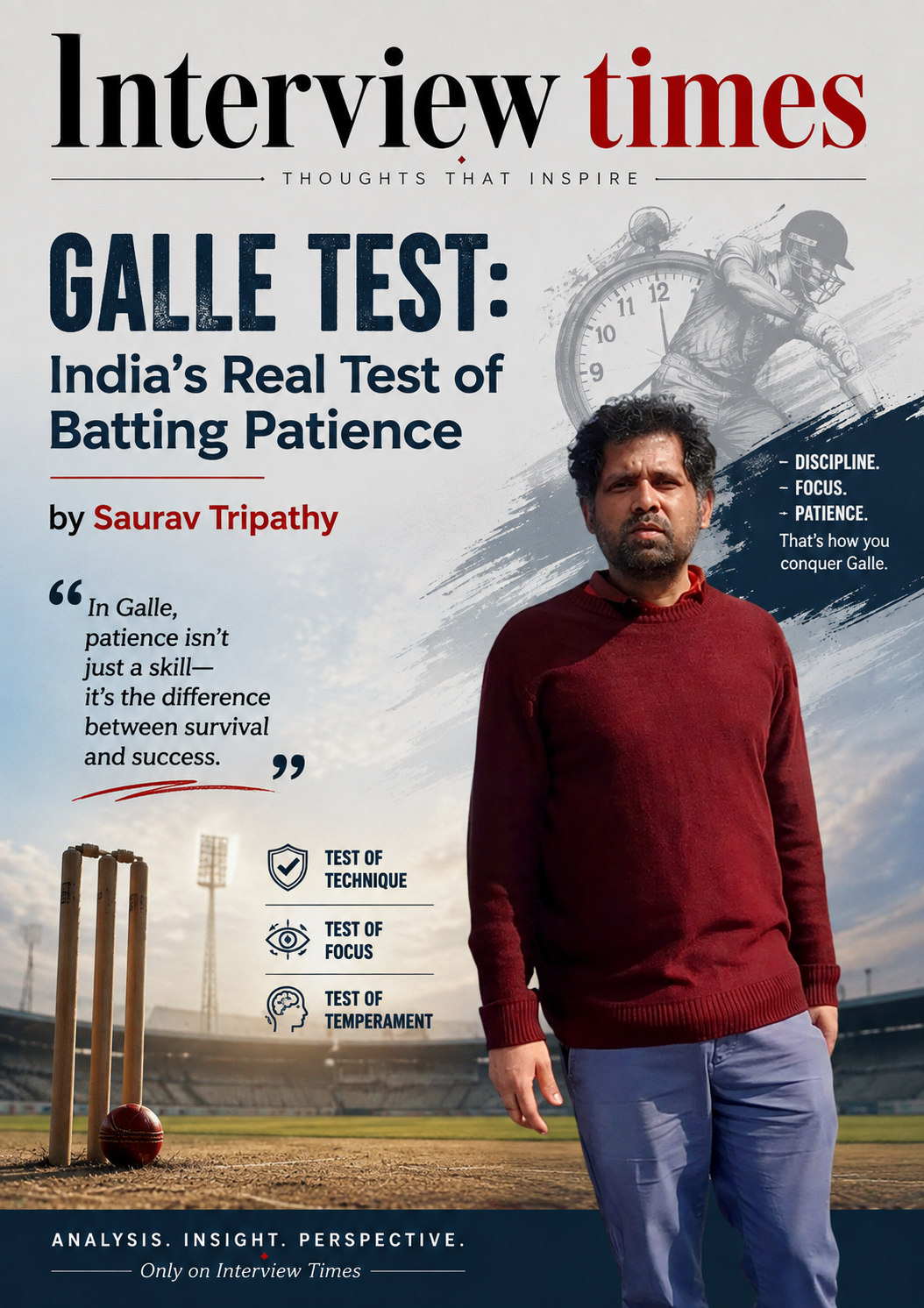
The first Test at Galle could prove to be a genuine examination of India’s batting temperament. At this venue, the toss remains crucial, with batting first often offering the best opportunity to put substantial runs on the board before the pitch begins to deteriorate.
The new ball can provide some assistance, but once that phase passes, the second and much of the third day can offer relatively good conditions for batting. The real transformation usually comes later, when the surface begins to break up and the spinners come into the game. From the latter stages of the third day onwards, batting requires greater application, patience and, above all, the ability to respect the conditions.
India must therefore avoid getting trapped into playing aggressively on a turning track. Sri Lanka possess quality spin options in Prabath Jayasuriya, Dhananjaya de Silva and company, capable of exploiting any impatience. India’s batters will have to build partnerships rather than chase boundaries.
Rishabh Pant, in particular, needs to understand the value of his wicket. His ability to change the course of a Test is unquestionable, but on a deteriorating surface, shot selection will be as important as stroke-making.
Yashasvi Jaiswal will be central to India’s plans. He needs to spend considerable time at the crease and work particularly on the square region, where the spinners are likely to challenge him.
The inclusion of Manav Suthar and Devdutt Padikkal could provide India with valuable balance and a left-hand dimension. If Sarfaraz Khan gets the opportunity, his ability to play spin could become a major asset.
Probable XI: Yashasvi Jaiswal, KL Rahul, Devdutt Padikkal, Shubman Gill, Sarfaraz Khan, Rishabh Pant, Ravindra Jadeja, Manav Suthar, Mohammed Siraj, Kuldeep Yadav and Prasidh Krishna.
Galle demands patience before it rewards aggression. If India bat long in the first innings, protect their wickets and exploit the best batting period, they have every chance of securing a comfortable Test victory.
