
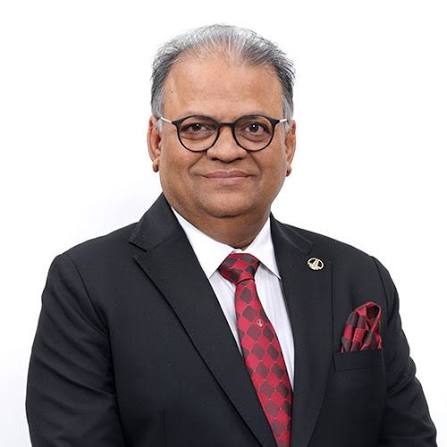
Penned By- Prisita Das
At a time when energy security, technological advancement and sustainability are redefining the global energy landscape, Arun Kumar Singh’s leadership at ONGC reflects the growing importance of strategic thinking, operational discipline and long-term national priorities.
The energy sector is undergoing one of the most consequential transformations in its history. With geopolitical uncertainties, fluctuating global energy markets and the accelerating shift towards cleaner sources of power, energy companies are increasingly expected to balance conventional resource development with the demands of a sustainable future. At the centre of this evolving landscape in India stands Arun Kumar Singh, Chairman and CEO of Oil and Natural Gas Corporation (ONGC), whose leadership has focused on strengthening the country’s energy capabilities while preparing the organisation for the next chapter of its growth.
With nearly four decades of experience in the oil and gas industry, Singh brings a wealth of technical knowledge, institutional understanding and corporate leadership to one of India’s most strategically significant public sector enterprises. A Mechanical Engineering graduate from the National Institute of Technology, Patna, he has built a distinguished career across diverse segments of the energy value chain, combining operational expertise with an understanding of complex business environments.
Before assuming charge as ONGC’s Chairman on December 7, 2022, Singh served as Chairman and Managing Director of Bharat Petroleum Corporation Limited (BPCL), a Maharatna public sector undertaking and Fortune Global 500 company. His professional journey also includes leadership responsibilities at Indraprastha Gas Limited (IGL) and Bharat PetroResources Limited, where he served as President (Africa & Australia), contributing to the expansion of BPCL’s international exploration interests. These assignments provided him with valuable exposure to domestic energy distribution, international exploration and the commercial dimensions of the petroleum industry.
Strengthening India’s Energy Security
Under Singh’s leadership, ONGC has continued to pursue its central mandate of strengthening domestic exploration and production capabilities. As India’s largest oil and gas exploration and production company, ONGC occupies a critical position in the country’s energy security framework. Its ability to discover new reserves, maximise recovery from mature fields and improve operational efficiency has direct implications for India’s dependence on imported hydrocarbons.
A significant expression of this strategic direction is the company’s renewed emphasis on deepwater and ultra-deepwater exploration. In August 2026, Singh announced an investment commitment of approximately ₹1 lakh crore over five years for deepwater exploration, alongside plans to drill 87 wells by March 2031. The initiative reflects an ambition to unlock challenging offshore resources through advanced technologies and sustained capital investment.
The organisation’s broader priorities also include strengthening strategic petroleum reserves, expanding its international business footprint and improving resilience against disruptions in global energy supply chains. These initiatives demonstrate the importance of looking beyond immediate production targets towards long-term resource security.
Balancing Growth with the Energy Transition
For Singh, the future of ONGC is not defined exclusively by conventional oil and gas operations. The energy transition presents both a challenge and an opportunity for established energy enterprises to diversify their capabilities and embrace emerging technologies.
ONGC’s expanding engagement with renewable energy, cleaner fuel alternatives, green hydrogen and other low-carbon initiatives reflects this changing strategic outlook. Through its wider group ecosystem, the organisation is exploring opportunities across renewables, petrochemicals, gas and emerging energy solutions.
This transition, however, requires careful execution. Maintaining the reliability of conventional energy supplies while investing in tomorrow’s technologies calls for financial discipline, technological adaptability and a long-term institutional perspective.

Leadership Beyond the Balance Sheet
Singh’s professional journey reflects an understanding that the success of a national energy enterprise extends beyond financial performance. It encompasses operational excellence, responsible resource management, stakeholder confidence and the ability to build an organisation equipped for future challenges.
As he concludes his tenure at ONGC, his leadership journey offers a compelling perspective on the responsibilities of steering a public sector energy major through a period of structural transformation. His contribution will be viewed in the context of the organisation’s continuing efforts to strengthen domestic production, explore new resource frontiers and prepare for a diversified energy future.
Ultimately, the larger measure of leadership in the energy sector lies in creating capabilities that outlast individual tenures. For an organisation as consequential as ONGC, the task is not merely to fuel India’s present, but to help secure its energy ambitions for generations to come
