
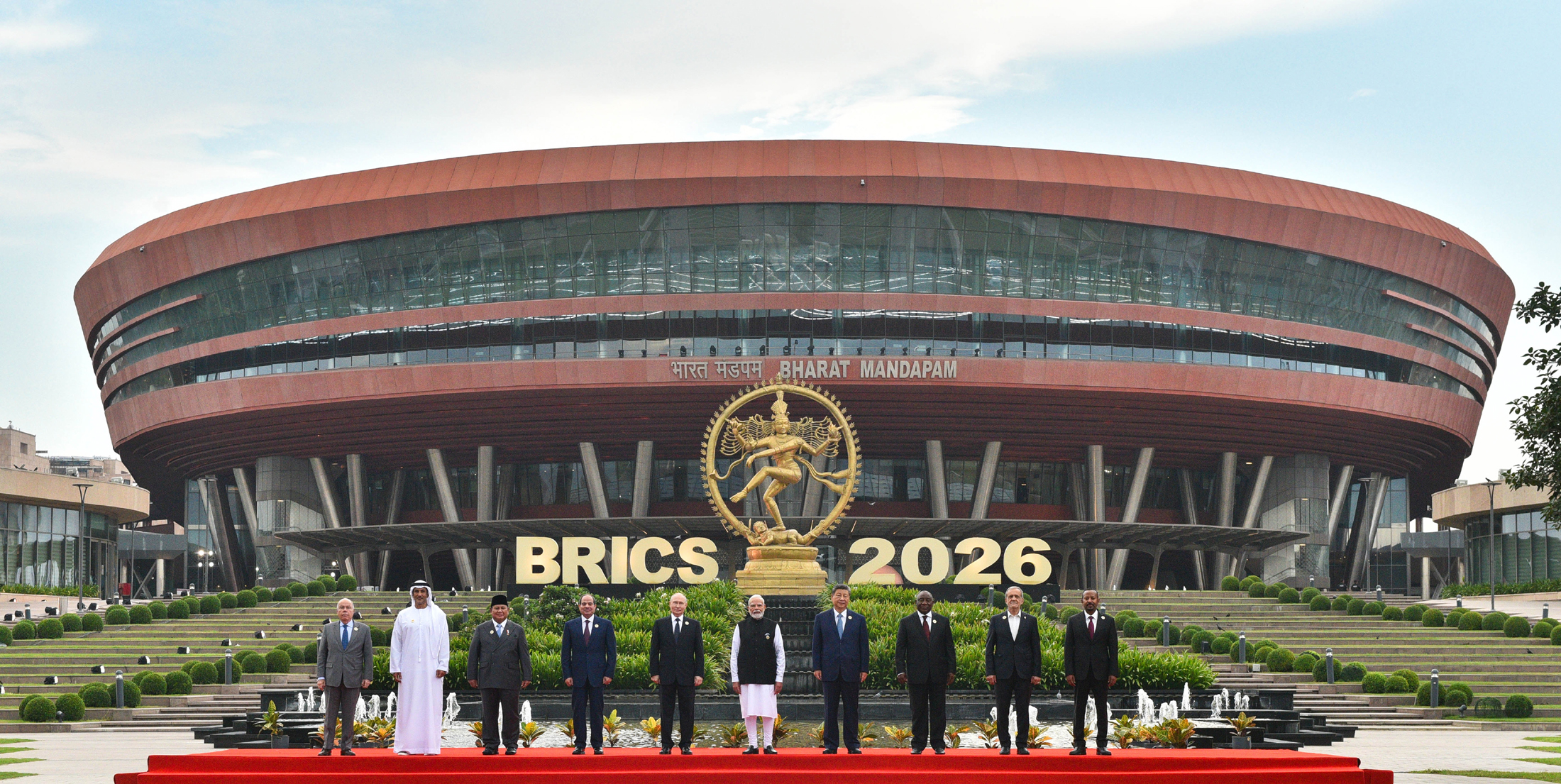
New Delhi: The 18th BRICS Summit, hosted by India in New Delhi on September 12–13, 2026, has concluded with an ambitious agenda spanning global trade, financial cooperation, artificial intelligence, energy security, institutional reform and geopolitical stability.
Held under the theme “Building for Resilience, Innovation, Cooperation and Sustainability,” the summit brought together leaders of the expanded BRICS grouping at a time when conflicts, tariffs, supply-chain disruptions and economic uncertainty are reshaping the international business environment.
New Delhi Declaration Sets the Direction
One of the summit’s most important outcomes was the adoption of the New Delhi Declaration, which demonstrated that BRICS members could reach consensus despite significant differences over geopolitical issues.
The declaration called for stronger multilateralism and reforms to international institutions while addressing trade restrictions, energy security, sustainable development, technology and global conflicts.
For businesses, the significance lies in BRICS increasingly moving beyond geopolitical dialogue towards mechanisms that could influence trade, investment, payments, infrastructure and technology cooperation.
Push for Local-Currency Trade and Faster Payments
Financial cooperation emerged as a major economic theme.
BRICS is exploring greater interoperability between payment and messaging systems while encouraging the use of members’ local currencies for trade settlements and investment. The BRICS Payment Task Force is examining ways to improve cross-border payment connectivity.
Such initiatives could potentially reduce transaction friction between member economies and create alternative channels for expanding intra-BRICS commerce.
Trade Barriers and Supply Chains in Focus
With protectionism and geopolitical tensions disrupting international commerce, BRICS leaders expressed concern over unilateral tariff and non-tariff measures and stressed the importance of maintaining the smooth flow of international trade and energy.
Supply-chain resilience has consequently become much more than a logistical concern—it is increasingly a strategic priority for governments and businesses alike.
AI and Innovation Enter the BRICS Growth Agenda
Technology also occupied a prominent position at the summit.
Artificial intelligence, digital infrastructure and innovation are emerging as new areas of cooperation among BRICS economies. Chinese President Xi Jinping used the summit to propose deeper cooperation under the broader “Greater BRICS” framework, including initiatives involving AI, services trade and special economic zones.
For emerging economies, cooperation in these areas could open new possibilities for startups, technology companies and digital infrastructure providers.
Energy Security Remains Critical
Energy security remained another crucial issue as conflicts and geopolitical tensions continue to affect global oil markets and shipping routes.
BRICS members emphasised the importance of reliable energy flows alongside cooperation on sustainable development and the energy transition. This makes energy increasingly central to the bloc’s wider economic-security agenda.
Global South Seeks a Bigger Voice
Beyond economics, the summit reinforced calls for a more representative global governance system.
BRICS members advocated reforms to international institutions, including the United Nations and global economic bodies, to increase the representation of emerging and developing economies.
As BRICS expands its reach, the grouping is positioning itself as an increasingly influential platform through which the Global South can shape discussions on trade, finance, technology and development.
Consensus Despite Global Divisions
Perhaps one of the summit’s most notable achievements was securing a common declaration despite differences among members over ongoing conflicts.
On the escalating Middle East crisis, BRICS called for maximum restraint and diplomatic resolution rather than assigning explicit blame to individual countries. The carefully negotiated language illustrated both the internal differences within the expanded grouping and its determination to maintain consensus.
What BRICS 2026 Means for Business
For corporate leaders, investors and entrepreneurs, the significance of BRICS 2026 extends beyond diplomacy.
A stronger focus on local-currency transactions, cross-border payments, resilient supply chains, AI cooperation, energy security and investment connectivity could gradually influence how companies operate across some of the world’s largest emerging markets.
The New Delhi Summit therefore represents an important evolution of BRICS—from a platform primarily associated with geopolitical coordination into an increasingly consequential forum for business, finance, technology and economic cooperation.
As global economic power becomes more distributed, the decisions emerging from New Delhi suggest that BRICS intends to play a larger role in shaping the rules and institutions of the next phase of globalisation.
“From dialogue to delivery, BRICS 2026 signals a Global South increasingly determined to shape the future of trade, technology and economic power.”
