
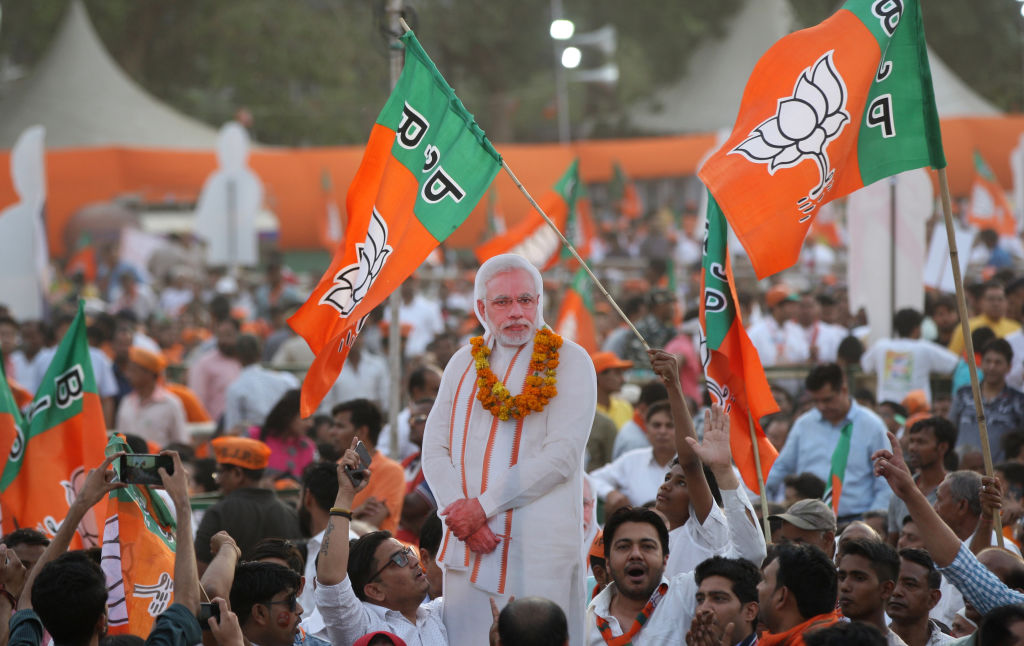
The 2025 Delhi Assembly elections marked a watershed moment in the capital’s political history, as the Bharatiya Janata Party (BJP) orchestrated a remarkable comeback, putting an end to the decade-long dominance of the Aam Aadmi Party (AAP). The saffron party clinched 47 out of 70 seats, reducing AAP to just 23, a stark contrast to its previous stronghold. This landslide victory signifies a decisive shift in voter sentiment, fueled by a combination of strategic governance promises, an aggressive electoral campaign, and growing disenchantment with AAP’s leadership. Here’s an in-depth analysis of the six pivotal factors that propelled BJP to a triumphant win over AAP:
Anti-Incumbency and AAP’s Leadership Challenges
After a decade in power, the Aam Aadmi Party (AAP) faced strong anti-incumbency sentiments. Public dissatisfaction with MLAs who were seen as inaccessible and ineffective played a key role in eroding AAP’s support. Even last-minute candidate changes by AAP failed to alter public perception, as voters had already made up their minds about the party’s shortcomings.

BJP’s Middle-Class-Centric Policies
The Union Budget, released just before the elections, included major tax reliefs for the middle class, reinforcing BJP’s appeal among this crucial demographic. AAP, once the champion of middle-class concerns, was now perceived as overly focused on welfare schemes for the underprivileged. BJP effectively capitalized on this shift by positioning itself as the party that prioritized middle-class interests, successfully drawing voters away from AAP.
Adoption of AAP’s Welfare Model
BJP neutralized AAP’s advantage by ensuring the continuity of existing welfare schemes while introducing additional benefits. The party announced measures such as Rs 2,500 monthly financial aid to women and subsidized LPG cylinders, which appealed to a broad section of the electorate. Prime Minister Narendra Modi’s personal assurance that welfare policies would remain intact further strengthened voter confidence in BJP’s governance approach.
Corruption Allegations and Governance Criticism
AAP, originally founded on an anti-corruption stance, suffered significant credibility damage due to the liquor policy controversy. The high-profile arrests of key AAP leaders, including Manish Sisodia and Sanjay Singh, further tarnished the party’s image. Kejriwal’s attempt to regain public trust by resigning and appointing Atishi as Chief Minister did little to change voter sentiment, as corruption allegations overshadowed the party’s governance record.
The Double-Engine Government Advantage
BJP’s promise of a “double-engine” government—where both the central and state governments work in alignment—resonated strongly with voters. The party highlighted how BJP-led states have benefited from seamless coordination with the Centre, resulting in better infrastructure, improved law and order, and faster policy implementation. This narrative reassured voters that electing BJP in Delhi would lead to greater developmental benefits and effective governance.
Strategic BJP Campaign and Modi’s Influence
BJP’s aggressive campaign effectively targeted Kejriwal’s governance failures, including issues such as air pollution and the deteriorating state of the Yamuna River. Prime Minister Narendra Modi played a crucial role in framing AAP as a disaster (‘AAPda’) for Delhi, using powerful political messaging and slogans. Additionally, Congress’ attacks on AAP contributed to opposition fragmentation, indirectly benefiting BJP and further weakening AAP’s electoral standing.
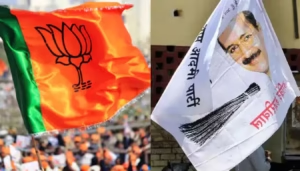
The 2025 Delhi elections were a defining moment in the capital’s political landscape, reflecting a shift in public sentiment and electoral priorities. BJP’s strategic campaign, coupled with governance assurances, played a key role in securing its victory. On the other hand, AAP faced challenges in addressing middle-class concerns, mitigating the impact of corruption allegations, and overcoming anti-incumbency factors. The election results underscore the changing dynamics of voter preferences, marking the beginning of a new political chapter in Delhi.
