
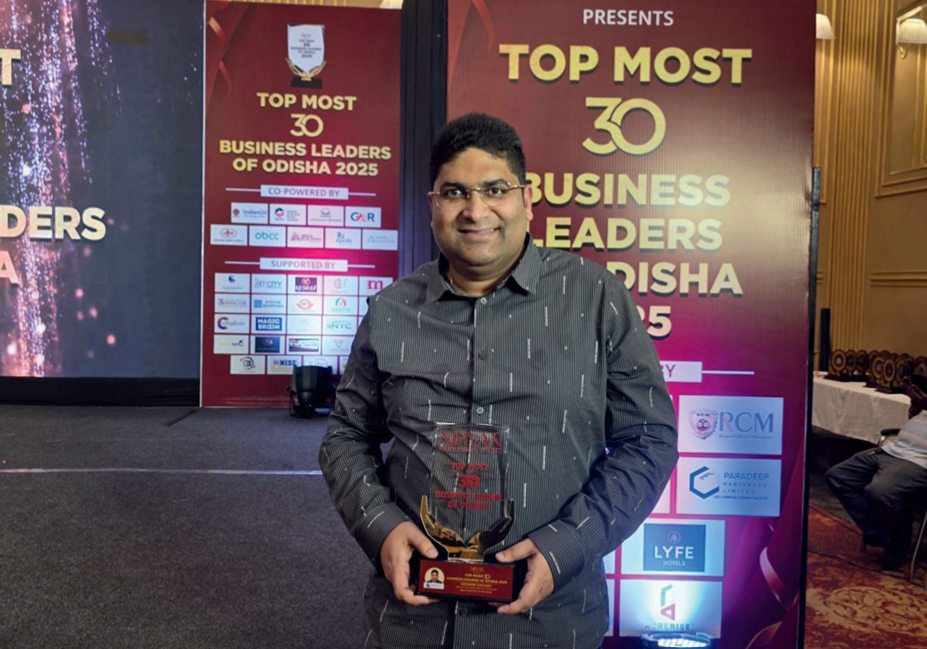

Mr. Abhishek Dwivedy is the founder of Aquapulse – an agritech startup headquartered in Bhubaneswar, that is revolutionizing aquaculture by providing AI-driven, sustainable solutions to enhance seafood production and reduce post-harvest stress. From AI-powered analytics to smart post-harvest handling traceability, their goal is to combine innovation with impact. Their model empowers farmers to minimize environmental footprint, and ensure consistent, high-quality seafood for global markets, creating a tech-enabled, responsible aquaculture ecosystem. Aquapulse recently raised funding worth Rs. 25 crore in Series A funding from NABVENTURES to scale its aquaculture tech platform.
We posed several questions to Mr. Dwivedi. His insight and expertise in aquaculture makes him a prized resource to the state of Odisha.
What changes does Aquapulse seek to bring in the aquaculture industry?
Aquapulse seeks to bring a transformational change to the aquaculture industry by building a technology-driven, sustainable, and farmer-centric ecosystem that improves efficiency across the entire seafood value chain. The company aims to solve some of the industry’s biggest challenges, including post-harvest losses, lack of scientific aquaculture guidance, fragmented supply chains, poor market access, and low price realization for farmers. By integrating AI-powered farm analytics, digital advisory systems, smart harvest planning, blockchain-enabled traceability, and rapid ice-slurry chilling technology, Aquapulse is creating a modern “pond-to-plate” model that ensures better quality seafood, faster processing, and improved global export standards.
The company works to provide aquafarmers with scientific advisory support, disease alerts, market intelligence, transparent buyer linkages, and export-readiness training so they can increase productivity and profitability.
Aquapulse also promotes responsible farming practices such as zero-antibiotic production, reduced feed wastage, ice slurry-efficient chilling systems, and traceable supply chains. Through its integrated ecosystem, Aquapulse aims to reduce spoilage, improve seafood freshness, strengthen India’s position in global seafood exports, and build a future where aquaculture is more transparent, efficient, profitable, and environmentally responsible.

How have you integrated AI into your services to solve problems faced by stakeholders like aqua farmers, dealers and exporters?
Aquapulse has integrated AI across multiple stages of the aquaculture value chain to address critical challenges faced by aquafarmers, dealers, processors, and exporters. Through its mobile application, the company uses AI-driven analytics to provide farmers with real-time pond monitoring, disease alerts, feed planning, water quality insights, crop calendars, and predictive advisory services that help improve productivity while reducing input costs and feed wastage. For dealers and aggregators, AI enables smarter harvest planning, demand forecasting, and transparent buyer-seller matching, helping reduce delays, price inefficiencies, and supply chain fragmentation. On the export side, Aquapulse leverages AI and machine learning for predictive trade analytics, price forecasting, market intelligence, buyer behaviour analysis, and compliance management for different international markets.
The company is also developing intelligent systems that integrate trade data, export documentation, and global seafood market trends to support faster and more informed business decisions. By combining AI with traceability, logistics coordination, and post-harvest optimization, Aquapulse is creating a more efficient, transparent, and globally competitive aquaculture ecosystem for all stakeholders involved.
What is the importance of sustainability in aquaculture?
Sustainability is extremely important in aquaculture because it ensures that seafood production can meet growing global demand without harming the environment, biodiversity, or the livelihoods of future generations. Sustainable aquaculture focuses on responsible aquaculture practices such as reducing water pollution, minimizing feed wastage, avoiding antibiotic usage, conserving coastal ecosystems and maintaining traceable and ethical supply chains. It also helps improve long-term productivity and profitability for aquaculture farmers by promoting healthier aquaculture systems and reducing disease risks and post-harvest losses. In addition, sustainability strengthens consumer and global buyer trust, as international markets increasingly demand safe, traceable, and environmentally responsible seafood products. By adopting sustainable practices, the aquaculture industry can balance economic growth with environmental protection while supporting food security, rural employment, and the preservation of aquatic ecosystems for the future.

What are some of the sustainable practices you implement in Aquapulse ?
At Aquapulse, sustainability is integrated into every stage of the aquaculture value chain to ensure responsible seafood production while protecting the environment and supporting aquaculture farmers’ livelihoods. The company implements several sustainable practices such as promoting zero-antibiotic and residue-free shrimp farming, reducing feed wastage through AI-driven advisory systems, and using water-efficient ice-slurry chilling technology to minimize post-harvest losses and preserve product quality.
Aquapulse also encourages traceability-first supply chains through digital monitoring and blockchain-backed systems, enabling transparency from pond to plate. In addition, the company supports sustainable aquaculture methods, scientific pond management, disease monitoring, and responsible harvest planning to improve productivity without harming aquatic ecosystems. Aquapulse further contributes to reduced pressure on wild fisheries, while working closely with farmers through training, certification support, and sustainable aquaculture awareness programs aligned with global sustainability standards and SDG 14 – Life Below Water.
What potential does Odisha have in harbouring change in the seafood industry?
Odisha holds immense potential to drive transformational change in the seafood industry due to its long coastline, rich marine resources, favourable climatic conditions, and rapidly growing aquaculture ecosystem. The state has vast opportunities in shrimp farming, brackish water aquaculture, seafood processing, and exports, supported by a large population of coastal aquaculture farmers and increasing government focus on blue economy development. Odisha’s strategic location and access to ports also make it an ideal hub for seafood trade and global exports. With the adoption of modern technologies, scientific aquaculture farming methods, sustainable aquaculture practices, cold-chain infrastructure, and digital market linkages, Odisha can emerge as one of India’s leading centres for high-quality and export-oriented seafood production. The state also has strong potential to create rural employment, empower coastal communities, attract investment, and strengthen India’s global seafood competitiveness. By combining sustainability, innovation, and farmer empowerment, Odisha can become a model state for responsible and technology-driven aquaculture growth.
Any specific struggle you faced in scaling such a startup?
One of the biggest challenges in scaling a startup like Aquapulse has been transforming a highly fragmented and traditional aquaculture ecosystem into a technology-driven and organized value chain.
Many small aquafarmers initially lacked access to scientific farming knowledge, digital tools, proper cold-chain infrastructure, and transparent market linkages, which made adoption of new systems a gradual process. Building trust among aquaculture farmers and stakeholders while introducing AI-driven advisory systems, traceability mechanisms, and sustainable aquaculture practices required continuous on-ground engagement, training, and awareness.
Another major challenge has been managing post-harvest inefficiencies and reducing spoilage in a sector where conventional methods are deeply rooted. Additionally, scaling operations across different regions while maintaining quality standards, aquaculture farmer support, logistics efficiency, and export compliance demands significant operational coordination and capital investment. Despite these challenges, the journey has reinforced Aquapulse’s commitment to creating a more sustainable, efficient, and globally competitive aquaculture ecosystem.
How does Aquapulse foster into the Blue Economy as Odisha is the first state to have initiatives like Marine Spatial Planning.
Aquapulse actively contributes to the growth of the Blue Economy by promoting sustainable, technology-driven, and economically inclusive aquaculture practices that align with Odisha’s progressive marine and coastal development initiatives, including Marine Spatial Planning. As Odisha focuses on balancing economic growth with marine ecosystem conservation, Aquapulse supports this vision by building a responsible seafood value chain that reduces environmental impact while increasing livelihood opportunities for coastal communities. Through sustainable shrimp farming, AI-powered farm management, traceable supply chains, reduced post-harvest losses, and zero-antibiotic production practices, the company helps optimize the use of marine and coastal resources in a more scientific and efficient manner. Aquapulse also strengthens the Blue Economy by empowering aquafarmers with better market access, improving export competitiveness, generating rural employment, and encouraging biodiversity-conscious aquaculture practices and reduced pressure on wild fisheries. By integrating innovation, sustainability, and community development, Aquapulse is helping Odisha emerge as a leading hub for responsible blue economic growth and modern aquaculture transformation.
