
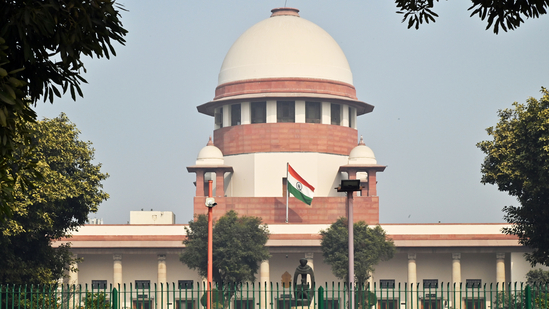
Petitioners challenging the Waqf Amendment Act, 2025 have urged the Supreme Court to stay its implementation, arguing that it overturns a legal framework in place for 125 years and is rooted in a “distrusting view” of the Muslim community’s ability to manage its own affairs.
In an affidavit filed ahead of Monday’s hearing, the petitioners—represented by advocate Talha Abdul Rahman—have strongly refuted the Centre’s claim of a “shocking” 116% increase in waqf properties since 2013, calling it “misleading” and based on suppressed facts. According to them, the rise is due to updates of pre-2013 records on the Waqf Asset Management System of India (WAMSI) portal, not the creation of new waqf properties.
“It appears a public official managing the portal either deliberately suppressed this fact or carelessly presented inaccurate data,” the affidavit alleges, calling the government’s figures “unsupported” and “scurrilous.”
The Centre, in its April 25 affidavit, claimed that waqf land rose from 18 lakh acres (pre-2013) to 38 lakh acres by 2024, citing the increase as justification for sweeping legal changes under the 2025 Act. The government argued the reforms were necessary to address encroachment and improve management of waqf assets.
However, the petitioners have questioned discrepancies in official data. While the Centre cites 665,476 waqf properties in 2025, waqf board officials report only 330,008, attributing the gap to how WAMSI groups entire waqf estates—comprising multiple structures—as single properties.
The petitioners argue that the new law grants excessive powers to collectors, enables arbitrary deletion of waqfs, and risks erasing thousands of unregistered waqf properties without due process.
Citing previous instances like the Maratha reservation and farm laws, the petitioners urged the court to stay the Act until a constitutional review is completed. “A stay is warranted when a law appears ex facie unconstitutional and poses irreparable harm,” the affidavit said.
On the Centre’s assertion that the reforms are consistent with Article 26(d) of the Constitution—which allows property regulation “in accordance with law”—the petitioners responded that the law infringes not only on Articles 25 and 26 (religious freedom) but also Articles 14 (equality), 19 (freedom), and 21 (life and liberty).
They further argued that the government cannot invoke the “essential religious practice” doctrine to defend the law, stating that Islamic charitable practices include community-managed properties, which are not subject to restrictions unless public order, health, or morality are at stake—none of which, they claim, apply here.
