Subhechcha Ganguly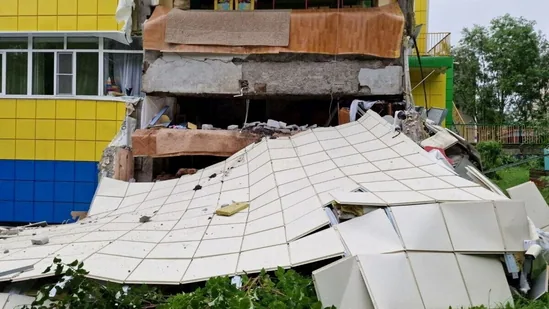
A powerful 8.8 magnitude earthquake struck Russia’s Kamchatka Peninsula early Wednesday morning, marking the world’s strongest seismic event in 14 years. According to the U.S. Geological Survey, the quake is the sixth most powerful ever recorded, and the most severe since the devastating 2011 Japan earthquake and tsunami.
The quake caused intense ground shaking across eastern Russia and has triggered tsunami warnings for countries across the Pacific Rim, including Japan, the United States, and several Pacific Island nations. Authorities in Hawaii, Alaska, and the U.S. West Coast have issued emergency tsunami alerts and are preparing for potential coastal impacts.
In Japan, the Meteorological Agency has warned of waves reaching up to three meters high, urging residents to evacuate low-lying coastal areas immediately.
The Kamchatka region, situated along the seismically active Pacific Ring of Fire, has a history of powerful earthquakes. The last major quake of this magnitude in the area was in 1952, during the Soviet era, when a 9.0 magnitude earthquake struck, causing widespread damage.
Wednesday’s quake now ranks among the most significant seismic events in history, alongside the 1960 Chile earthquake (9.4–9.6 magnitude), the 1964 Alaska earthquake (9.2–9.3), and the 2004 Indian Ocean earthquake off Sumatra.
Emergency response teams have been mobilized in Russia and neighboring nations, with tsunami monitoring stations on high alert. There have been no immediate reports of casualties or damage, but assessments are ongoing.
The international community is closely monitoring the situation as aftershocks continue to rattle the region.