
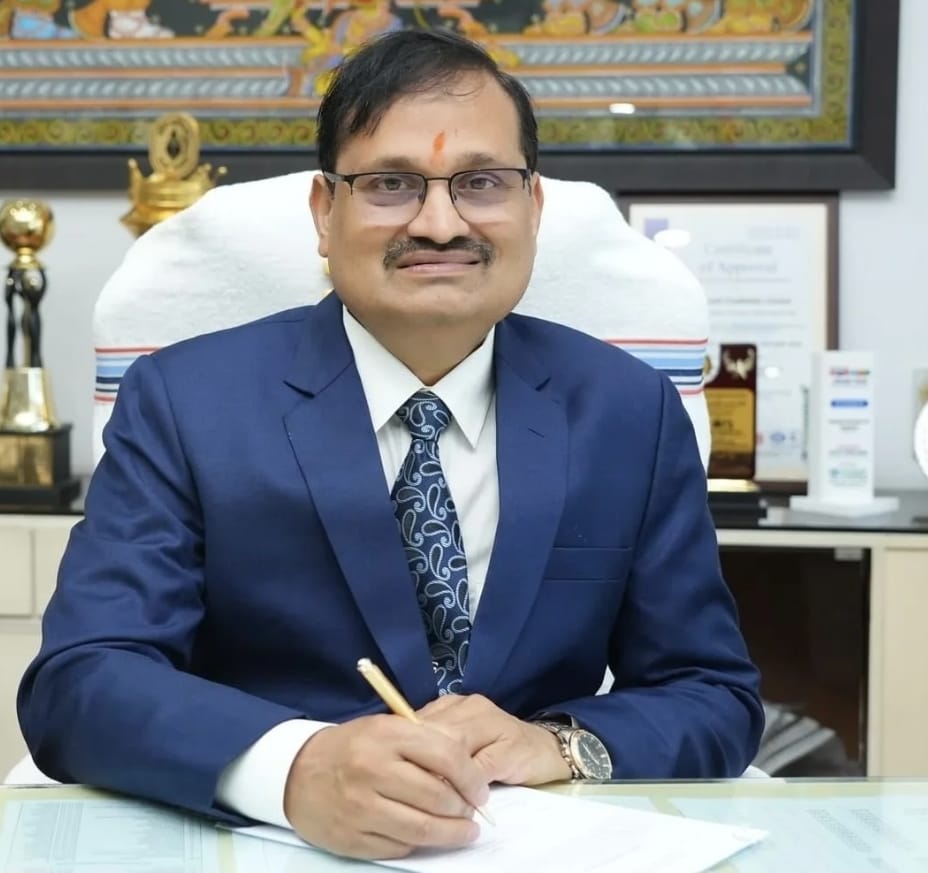
In India’s public-sector landscape—often associated with scale, complexity, and bureaucracy—leadership that blends operational strength with social accountability stands out. Shri Keshav Rao, Director (Human Resources) at Mahanadi Coalfields Limited (MCL), exemplifies this rare balance. Over the years, his work has quietly reshaped how one of India’s most critical coal-producing subsidiaries approaches people management, community development, and responsible growth.
An alumnus of IIT Bombay and IIM Ahmedabad, with a postgraduate diploma in Human Resources, Shri Rao’s academic foundation reflects both technical rigor and managerial depth. Since joining MCL, a subsidiary of Coal India Limited, and assuming charge as Director (HR) in December 2019, he has overseen a wide spectrum of responsibilities that extend far beyond conventional human resources. His portfolio includes industrial relations, HR management and development, corporate social responsibility (CSR), public relations, welfare, land acquisition, security, legal affairs, and policy formulation—placing him at the intersection of governance, people, and strategy
Strengthening the Backbone of Operations
Coal remains central to India’s energy security, and MCL plays a vital role in meeting national demand. During Shri Rao’s tenure, the company’s coal production grew steadily—from 140 million tonnes to 225 million tonnes in the last financial year. This growth was not merely numerical; it reflected a coordinated effort involving workforce stability, industrial harmony, and responsive leadership. Notably, MCL’s contribution helped avert a potential power crisis two years ago, underscoring the strategic importance of effective human and operational management in the energy sector
Shri Rao’s approach has emphasized institutional trust—between management and workers, between corporate leadership and local communities, and between industry and government stakeholders. His role as a member of the MCL Board has further enabled him to influence policy decisions at the corporate level, ensuring that people-centric considerations remain integral to large-scale industrial planning.
CSR as a Long-Term Commitment, Not a Checkbox
Where Shri Rao’s leadership becomes especially distinctive is in the scale and intent of MCL’s CSR initiatives. Under his guidance, CSR at MCL evolved from isolated welfare activities into structured, high-impact interventions addressing healthcare, education, sports, skill development, and rural livelihoods.
Among the most significant projects is the construction of a Medical College at Talcher, Angul, developed at a cost of ₹492.62 crore. The institution is expected to strengthen healthcare infrastructure not only for mining regions but for surrounding districts as well. Complementing this is a ₹103 crore Cardiac Care Hospital at Jharsuguda, established under MCL’s CSR initiative, aimed at addressing critical healthcare needs in western Odisha
Sports and youth development have also found a place in MCL’s social vision. The company invested ₹225 crore in a Sports Complex at Burla, promoting physical education and regional sporting talent. In the education sector, over 1,034 smart classrooms have been installed across government schools in districts such as Jharsuguda, Sundargarh, Sambalpur, and Mayurbhanj—bridging digital gaps in rural learning environments
Empowering Communities Beyond Infrastructure
Infrastructure alone does not guarantee sustainable development, a reality Shri Rao’s CSR strategy has consistently acknowledged. During his tenure, MCL provided skill development training to more than 3,500 youth across Odisha, enhancing employability and income opportunities. Simultaneously, around 7,000 families from 40 villages in Angul, Sambalpur, Jharsuguda, and Sundargarh benefited from livelihood support initiatives implemented through the CCDP “Uthan” project in collaboration with BAIF
These initiatives highlight a shift from short-term assistance to long-term capacity building—an approach increasingly recommended by development economists and CSR policy frameworks in India. Over a span of seven years, MCL invested ₹1,439 crore in impactful CSR initiatives, reinforcing its position as a responsible corporate entity within the public sector
Leadership During Crisis
The COVID-19 pandemic tested leadership across sectors, and Shri Rao’s tenure coincided with one of the most challenging periods for industry and governance. During the crisis, he demonstrated proactive leadership by ensuring necessary assistance to both State and Central Governments. Maintaining essential coal production while safeguarding workforce welfare required swift decision-making, coordination, and empathy—qualities that defined his response during the pandemic years
Recognition and Global Exposure
Shri Rao’s contributions, particularly in CSR, have received national recognition. He was conferred the CSR Leader of the Year award by Governance Now for CSR initiatives undertaken at MCL. His team also won the National CSR Award in the Agriculture and Rural Development category—affirming the tangible impact of MCL’s community-focused programs
Beyond national boundaries, Shri Rao has engaged with global best practices through training programs and conferences in the United States, United Kingdom, France, Austria, and Portugal. He has also delivered training sessions in South Africa and regularly lectures on leadership, HR, and governance topics across organizations, contributing to knowledge-sharing within and beyond the public sector
A Quiet Architect of Sustainable Growth
In an era where leadership is often measured by visibility, Shri Keshav Rao’s work reflects a different philosophy—one rooted in institutional strengthening, social responsibility, and long-term impact. By aligning operational excellence with human development, he has helped redefine the role of HR leadership in heavy industry.

As India continues to balance economic growth with social and environmental responsibility, leaders like Shri Rao demonstrate that even in traditional sectors such as coal, progressive governance and people-first strategies can coexist with scale and efficiency. His journey at MCL serves as a reminder that sustainable development is ultimately driven not just by resources, but by values, vision, and thoughtful leadership.
