
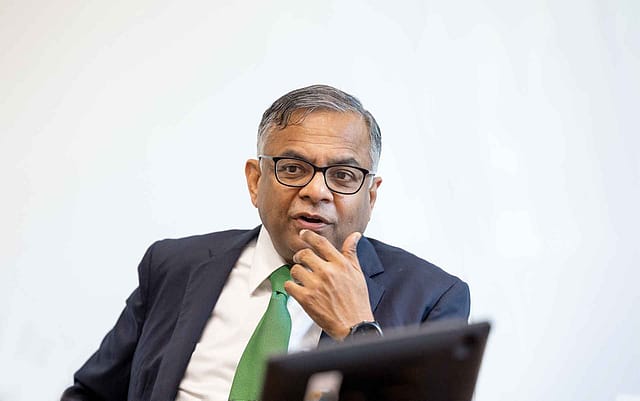
N. Chandrasekaran, the man who has steered Tata Sons through nine of its most consequential years, has resigned as chairman of India’s largest conglomerate, but will remain in the role until his current term formally ends in February 2027, a source with direct knowledge of the matter told Reuters on Wednesday. The move comes just days before a shareholder vote that could have decided his fate publicly, & it caps months of simmering tension between Tata Sons & its controlling shareholder, Tata Trusts.
Tata Sons, the principal holding company of the roughly $400-billion Tata Group, oversees more than 30 companies including Tata Consultancy Services, Tata Motors & Air India. It is in turn 66% owned by Tata Trusts, the group’s philanthropic arm, which is now chaired by Noel Tata. That ownership structure has placed Noel Tata at the centre of the standoff that ultimately pushed Chandrasekaran toward the exit.
A Reappointment That Never Came
The cracks first became visible in February, when the Tata Sons board unexpectedly deferred a decision on giving Chandrasekaran a 35 years term as chairman. Noel Tata had objected to the reappointment, reportedly citing concerns over the performance of some of the group’s newer ventures, including Air India’s turnaround & the BigBasket grocery business. Since then, according to multiple reports, the disagreement has widened well beyond performance metrics.
Chief among the sticking points was Tata Trusts’ reported demand for a firm commitment that Tata Sons would never be listed on the stock exchange; a condition Chandrasekaran was unwilling to accept, according to a source familiar with the discussions. The two sides have also clashed over board representation, & tensions were further inflamed by the unresolved, long-running negotiations over the exit of minority shareholder Shapoorji Pallonji Group, which holds an 18.4% stake in Tata Sons. That dispute had already led to the removal of one Tata Sons director earlier this year.
Matters were coming to a head ahead of Tata Sons’ annual general meeting on August 18, where shareholders were scheduled to vote on Chandrasekaran’s reappointment as a director — a prerequisite for his continuing as chairman. Rather than let the outcome play out in a public shareholder vote, Chandrasekaran reportedly discussed stepping down with close associates in recent days, choosing to resign on his own terms. Shares of Tata Consumer Products, TCS, Titan & Tata Power each slipped as much as 1% as the reports broke.
Echoes of 2016
For a conglomerate built on a carefully cultivated image of stability, the episode inevitably invites comparison with 2016, when Tata Sons’ board abruptly sacked then-chairman Cyrus Mistry after a bitter falling-out with group patriarch Ratan Tata over governance. That rupture spilled into a years-long legal battle & left a lasting mark on the group’s boardroom culture. This time, both sides appear to have opted for a quieter, negotiated exit rather than a public confrontation, though the underlying tensions over control, strategy & the trusts’ philanthropic mandate remain unresolved.
Chandrasekaran, 63, joined the Tata group in 1987 & rose through Tata Consultancy Services, becoming its chief executive in 2009 before taking charge of Tata Sons in February 2017. Over his tenure he pushed the sprawling conglomerate toward greater financial discipline, consolidated cross-holdings among group companies, steered the acquisition & revival of Air India, also pursued semiconductor as well as the electric-vehicle ambitions as part of a broader manufacturing push.
Neither Tata Sons nor Chandrasekaran has issued an official statement, & the group hasn’t confirmed a successor. With Chandrasekaran staying on in a caretaker capacity until February, attention will now turn to how & to whom; Tata Trusts & Tata Sons hand over leadership of one of the world’s most closely watched family-controlled conglomerates.
