
 Feature: In the heart of rural Odisha, where conversations about women’s health are often wrapped in silence and stigma, Ms. Payal Patel has emerged as a powerful voice for change. Fondly known as the Pad Girl of Odisha, she has turned personal pain into a public mission, touching thousands of lives across the state.
Ms. Payal Patel’s story begins with resilience. After completing her graduation in Science, she faced the sudden loss of her father — a turning point that forced her to shoulder the responsibility of her family. Instead of allowing grief to break her, she found strength in service. Deeply disturbed by the health and hygiene challenges faced by girls and women in her village, she decided to take action. Menstruation remained a subject shrouded in taboo, forcing many girls to drop out of school, endure infections, or live in quiet shame. Ms. Payal resolved to break this cycle of silence.
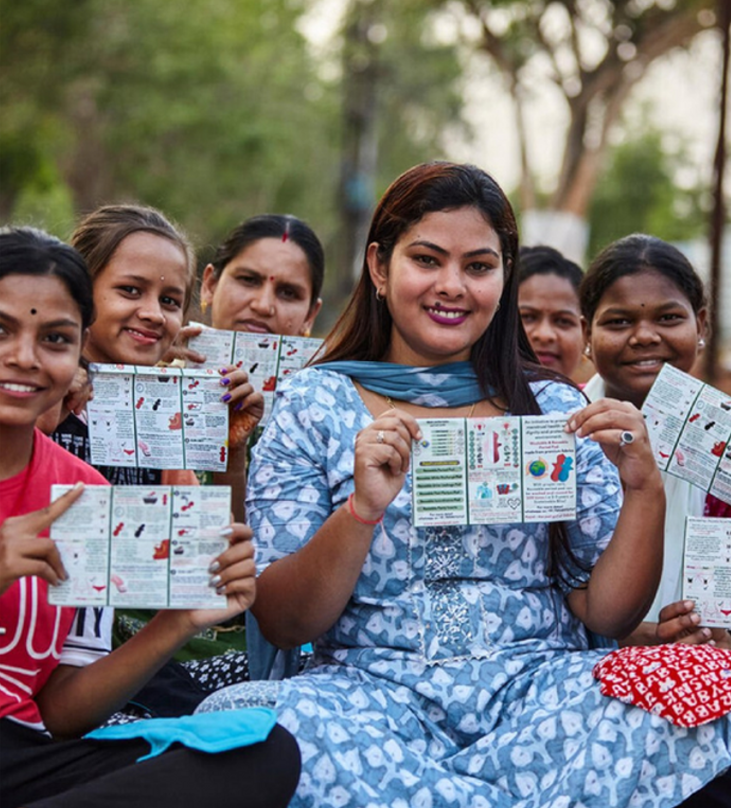
She began by initiating “Chuppi Todo,” a campaign that urged women and girls to speak openly about menstruation, to seek knowledge, and to adopt safe hygiene practices. This was not just an awareness drive — it was a cultural revolution. Conversations that were once whispered in embarrassment began to be spoken aloud with confidence. Women started sharing their experiences, girls began asking questions, and slowly, a movement was born.
But Ms. Payal knew that education alone was not enough. Awareness needed to be paired with access and affordability. On May 28, 2017, World Menstrual Hygiene Day, she inaugurated her own sanitary pad production unit, marking the beginning of a lifelong commitment. What started as an effort to promote the use of sanitary pads soon evolved into a larger, sustainable mission. By 2022, she had introduced reusable menstrual pads that offered high-quality absorbency, comfort, and eco-friendliness — a solution designed not just for hygiene, but also for the environment.
To take her mission further, Ms. Payal founded M/S Prasanta Enterprises, a social enterprise run entirely by women. This was not just a production facility but a place of empowerment. Women from Below Poverty Line (BPL) families were trained in manufacturing, packaging, and distribution, giving them both income and confidence. What began as a project to address hygiene became a force for economic upliftment, as women who once lived in silence began to lead conversations on menstrual health in their villages.
Their signature product, Health Plus Hygiene, a low-priced sanitary pad made from natural fibers, quickly became popular. Over time, the enterprise expanded to produce reusable menstrual kits, and in just one year, they distributed them to over 10,000 women and girls across Odisha. Each packet carried more than just pads — it carried dignity, comfort, and a message that menstrual health should never be a privilege.
Ms. Payal’s work soon caught the attention of major organizations and government bodies. Collaborations with JSW Steel led to the distribution of thousands of free sanitary pads in underprivileged communities. UNICEF India recognized the power of her Chuppi Todo initiative and partnered with her to expand awareness efforts further. She has been felicitated by the Hon’ble Chief Minister of Odisha, Union Ministers, and numerous organizations for her relentless dedication, with her work widely covered by state and national media.
Ms. Payal Patel’s journey is a story of courage, compassion, and conviction. Her mission is not just to distribute pads, but to restore dignity to every girl and woman, to ensure no girl misses school because of her period, and no woman suffers silently due to lack of access or awareness. In transforming her personal tragedy into a crusade for social change, Ms. Payal has proven that one determined individual can spark a movement strong enough to shift an entire culture.
Today, the Pad Girl of Odisha continues her work with undiminished passion, committed to building a future where menstruation is spoken about with pride, not shame, and where every woman — no matter where she lives — has the right to health, hygiene, and dignity.
