

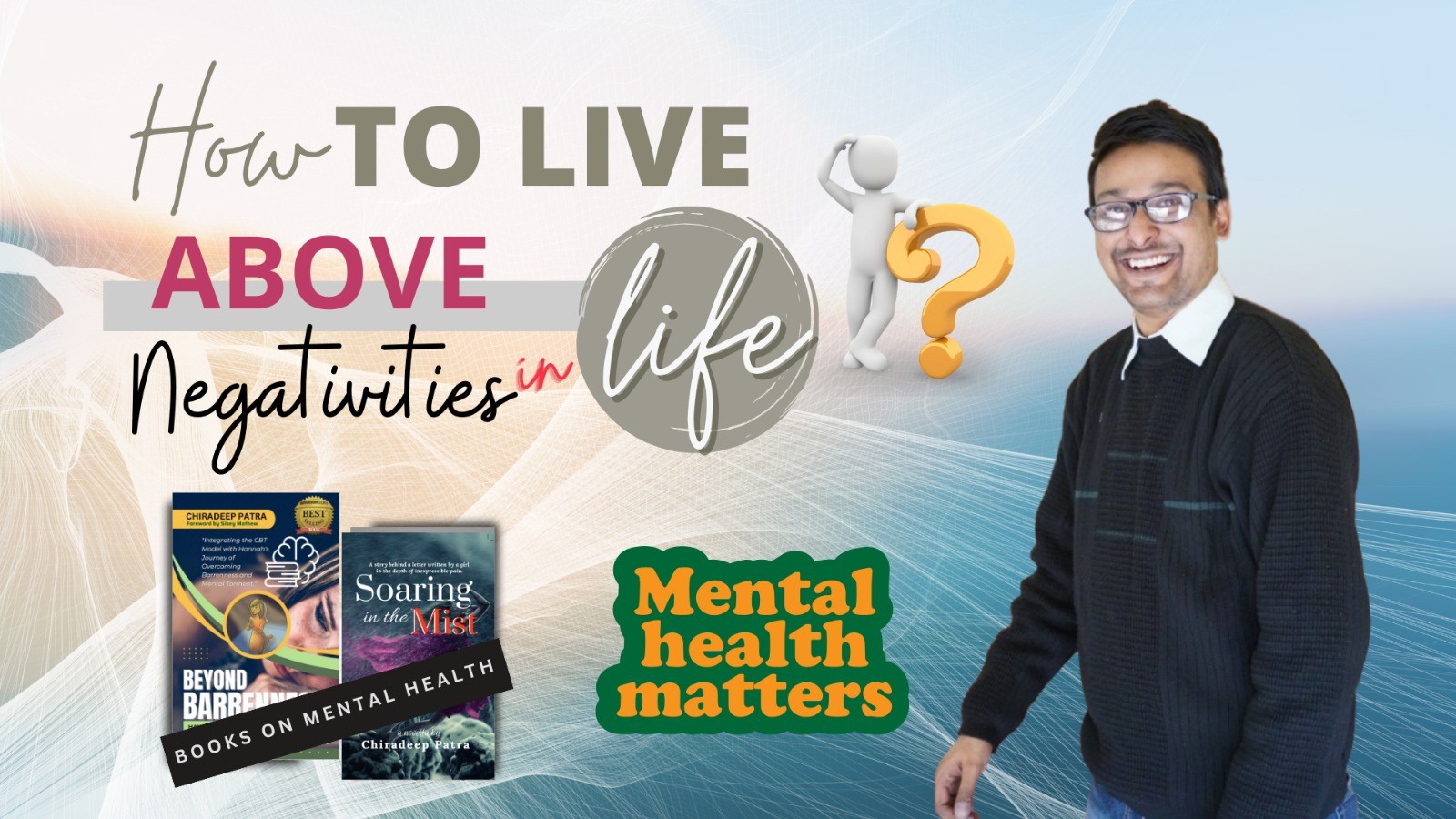
Chiradeep Patra is a prolific author who published 6 books in 13 months’ time and is also actively involved in counselling as a Life Coach and Motivational Counsellor. In this interview, let’s delve deeper into his background and explore his various initiatives.
- What inspired you to become a mental health counsellor and advocate for breaking mental health stigmas?
Ans: I have become well-acquainted with restrictions, pain, and suffering since my birth, as I was born with a heart disease. Furthermore, during my teenage years, I experienced the loss of someone close to me, who took her own life. This tragedy left me questioning why she felt the need to end her life, and I was filled with a sense of guilt for not being able to save her. Since then, I made a commitment to myself that whenever I encounter anyone, I will make an effort to truly get to know them and understand their struggles as much as possible.
This commitment ignited a transformative journey of self-improvement, leading me to dive deep into the realms of mental health, counselling, and life coaching. Through this ongoing process of personal growth and education, I aspired to make a positive impact on the lives of others, offering a helping hand to those who may be grappling with their own battles.
- Can you tell us a bit about the books you’ve written on mental health and the messages you aim to convey?
Ans: I have incorporated mental health themes into two of my books.
The first one, “Soaring in the Mist” is a novella where I delve into the perilous consequences of unawareness and ignorance surrounding mental health issues. In this story, I illustrate how the lack of understanding in this area can have fatal outcomes.
My most recent publication, “Beyond Barrenness: Hannah’s Path to Emotional Restoration,” is a counselling book that invites readers on a captivating journey through the experiences of a Biblical character, Hannah. Her struggles, as portrayed in the book, resonate with the emotional challenges faced by many individuals in today’s world. By drawing from the wisdom of the Bible and incorporating elements of Cognitive Behavioural Therapy (CBT), this book offers practical tools and insights. These resources empower readers to shift their focus away from daunting circumstances and towards God, the ultimate source of hope, comfort, and joy.
Check my books: https://chiradeeppatra.co/Books
- How do you approach addressing and challenging the stigmas surrounding mental health in your webinar?
Ans: In my webinar on mental health stigma, I take a multifaceted approach and they are as under:
Keynote Address:
- I provide an overview of mental health stigmas and their societal impact.
- We explore common misconceptions and stereotypes.
- Personal stories are shared to humanize the issue and demonstrate the benefits of breaking the silence.
- We feature individuals who’ve experienced stigmas firsthand and share their journeys.
- I address and debunk common myths and misconceptions with accurate information.
Panel Discussion with Q&A:
- A panel of experts, along with myself, discusses effective strategies for challenging stigmas.
- We explore the roles of education, media, and community engagement.
- Participants engage with the panel through a Q&A session.
- We provide resources for further support.
Call to Action:
- I conclude by sharing practical steps and resources for attendees to contribute to change.
- We encourage participants to become advocates and support mental health initiatives.
This condensed approach combines education, personal narratives, expert insights, and actionable steps to combat mental health stigmas.
- What are some common misconceptions or myths about mental health that you often encounter, and how do you debunk them?
Ans: As a counsellor and life coach, I’ve encountered several prevalent myths and misconceptions about mental health that deserve clarification:
- Mental health conditions are not real illnesses; they are just a sign of weakness or lack of character.
- People with mental health issues are “crazy” or “insane”.
- Only “mentally unstable” individuals seek therapy or counselling.
- Mental health conditions are just a phase that people will eventually grow out of.
- Seeking help for mental health issues is a sign of failure or inability to handle life’s challenges.
- Only “weak-minded” individuals experience anxiety or depression.
- Individuals with mental health issues are unfit for employment and cannot be productive members of society.
In response to the question of how I debunk these misconceptions and myths surrounding mental health, I would say that I utilize social media platforms like Instagram, Facebook, and LinkedIn to raise awareness about mental health. My aim is to provide people with accurate information, dispelling misconceptions and replacing them with a more informed understanding. Additionally, I educate individuals who seek counselling, helping them grasp the correct ideas about mental health during our sessions. Furthermore, I have undertaken the distribution and sale of e-posters related to mental health and its associated myths, with the intention of fostering awareness. Within my capacity, I strive to create awareness and educate people to the best of my ability. However, it’s important to recognize that there are more collective efforts that can be made to collectively combat these stigmas, misconceptions, and myths associated with mental health.
- Can you share a memorable or impactful story from your counselling experience that highlights the power of mental health support?
Ans: Oh yeah, definitely, I would like to share a deeply meaningful experience from my counselling practice that underscores the transformative power of mental health support.
Three months ago, I had the privilege of working with a client who was grappling with a complex web of emotional issues, particularly related to a family member. Despite having a stable relationship with her husband, she was burdened by profound emotional pain and struggled with depression. It was evident that her emotional well-being was deeply entangled with unresolved family matters.
Through our weekly counselling sessions, we embarked on a journey of self-discovery and healing. She demonstrated incredible resilience and determination in confronting her emotional challenges. I created a safe and supportive space for her to delve into her feelings, confront past traumas, and identify areas where personal growth was needed.
What made this experience particularly impactful was witnessing her gradual transformation. She learned to cope with her emotional turmoil and, more importantly, she gained insights into her own strengths and capabilities. It was a journey of self-empowerment, and I had the honour of guiding her through it.
Her story is a testament to the incredible potential for growth and healing that exists within each of us. It highlights the profound impact of mental health support in providing individuals with the tools, guidance, and understanding needed to navigate life’s challenges.
I am deeply grateful to have been a part of her journey towards emotional restoration, and I remain committed to offering the same level of care and support to all those who seek my assistance. She is still continuing with me, but she is better.
- How do you incorporate creativity and innovative approaches in your counselling sessions or seminars?
Ans: Empathy and active listening form the cornerstone of effective counselling and life coaching. While the primary focus is on these interpersonal skills, there is an opportunity to infuse creativity into the tools and materials used to aid our clients’ progress.
One area where creativity can shine is in the design of therapeutic tools. For instance, I encourage clients to maintain journals as part of their self-reflection process. These journals aren’t just functional; they’re designed with creativity to spark interest and engagement. Similarly, I develop charts and sheets that are not only effective but also visually appealing, making the process more enticing for clients.
In my commitment to providing an engaging and supportive experience, I invest time and effort into crafting innovative tools that resonate with my clients. These tools serve as aids on their journey to mental well-being. During recent webinars, I shared five beautifully designed posters, all personally created by me, to enrich the learning experience and provide valuable takeaways.
By infusing creativity into these tools, I aim to foster a deeper connection with my clients and help them stay motivated on their path to overcoming mental challenges. It’s a way to merge the art of counselling with innovative design, enhancing the overall impact of my counselling and coaching sessions.
Check my Digital printable: https://chiradeeppatra.co/Digital-Printable
7. What advice would you give to someone who wants to support a loved one dealing with mental health challenges?
Ans: If you have a loved one suffering with mental issues then following are a few pointers you need to remember while dealing with them:
- Always listen to them, more with your heart than your ears.
- Take note of the trigger points of the friend or family member who is suffering mentally.
- Accept and allow everything they say or do, even if it means sacrificing something at home.
- Never take them lightly at any point, nor take them for granted.
- Don’t treat them as patients; treat them as normally as possible.
- Refrain from all kinds of arguments and accusing statements.
- Ignore their actions in the moment but take note of them for future reference.
- Encourage and pray with them; show your empathy and compassion at all times.
- Include them in conversations, but be cautious and protective of them.
- If necessary, contact a professional without delay.
- How do you prioritise self-care and maintain your own mental well-being while helping others?
Ans: This is one of the toughest questions I face. At times, I become overwhelmed by the burden of my clients. I feel worn out and tired, yet I struggle to set aside my role as a counsellor and life coach. Deep down, I know that I must take care of myself to be there for them.
Since I primarily conduct online counselling, clients can only book sessions according to my schedule. However, it’s sometimes challenging when clients have my phone number. They call or message me whenever they feel down or sad. While I can’t outright dismiss them, I patiently remind them to contact me during my scheduled times. Fortunately, they all understand and respect this.
Here are some of the ways I prioritize self-care:
- Setting Boundaries: I establish clear boundaries between my professional and personal life to prevent burnout.
- Seeking Support: I have a trusted circle of colleagues with whom I seek supervision or consultation for insights and emotional support.
- Continuous Learning: I believe in ongoing learning in the field of counselling and coaching to meet the high standards my clients expect.
- Practicing What I Preach: I make an effort to incorporate the techniques and values I teach into my own life.
- Physical Health: As someone with a Congenital Heart Defect (CHD), I prioritize my physical health, focusing on a balanced diet and ensuring I get sufficient sleep for mental well-being.
- Time Management: I diligently schedule all my events and efficiently manage my time to minimize stress.
- Stress Relief: Funny, but I find online Ludo to be an effective stress-busting activity for me.
- Spiritual Nourishment: Another essential aspect of maintaining my mental state is through prayer and studying the Bible. These activities serve as a form of meditation and rejuvenation for me.
- What are some future goals or projects you have in mind to further promote mental health awareness and support?
Ans: I have a long list of topic ideas for upcoming webinars through my counselling profile on Topmate. I offer specific 1:1 sessions for clients interested in understanding mental health and self-discovery programs. Additionally, I’ll be speaking at an offline seminar on ‘Mental Toughness,’ as I’ve been invited as a guest speaker.
Stay updated on my plans and programs by saving this link: [www.chiradeeppatra.co]
- How do you envision a society without mental health stigmas, and what steps can we take to get there?
Ans: I envision a society where a person will easily announce to his or her family that they are going for a ‘Full Mind Check-up,’ just as people opt for ‘Full Body Checkup’ plans today.
There are four steps that we can always take to combat the stigmas surrounding mental health in our societies. They are as follows:
- Educate yourselves and others: Learn more about mental health conditions, listen to others’ stories, and share accurate information.
- Become advocates: Stand up against stigma, correct misconceptions, and support mental health initiatives.
- Promote empathy: Understand that mental health affects everyone, and practicing compassion can create a supportive environment.
- Seek help and support: If you or someone you know is struggling, reach out to mental health professionals or support helplines.