Suparjya swain

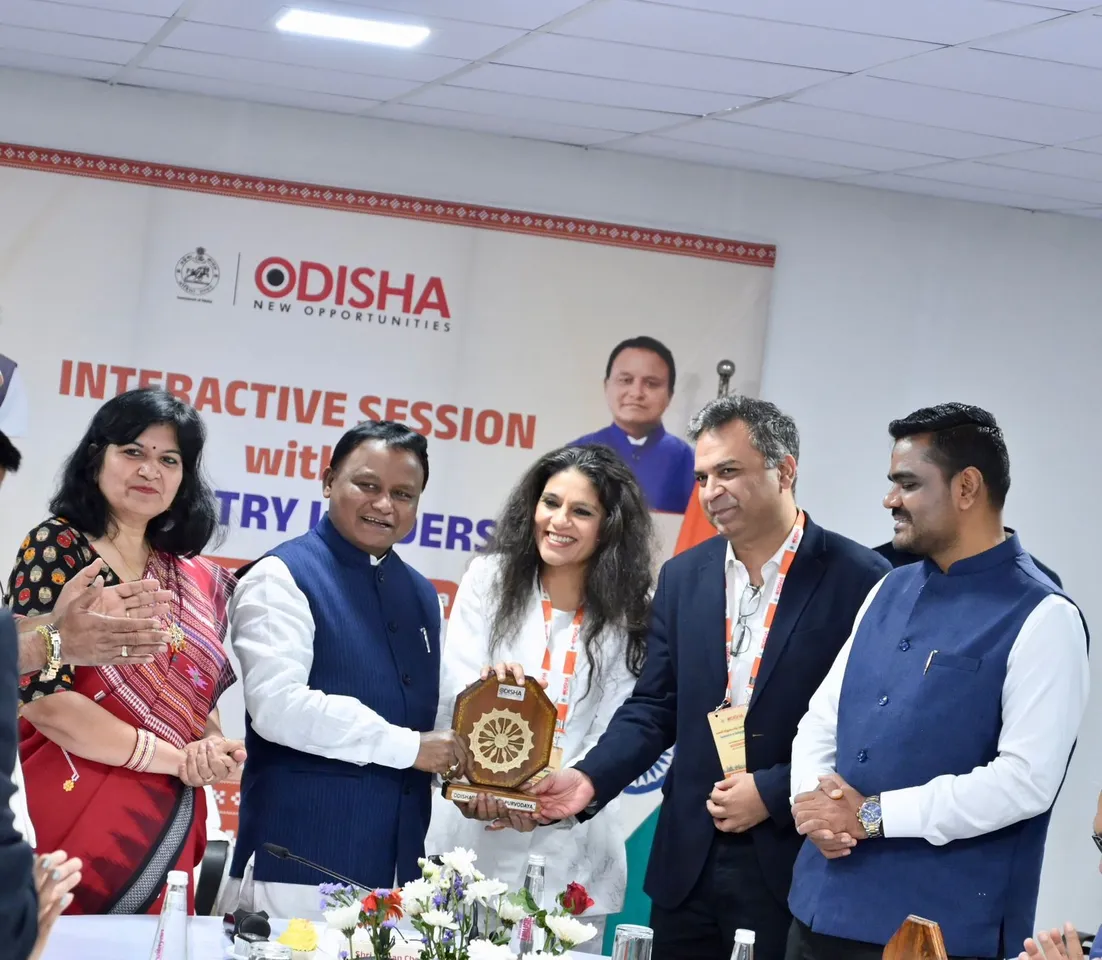
National CEO Conclave 2025
FEATURE: In a world where success is often associated with cosmopolitan hubs and high-profile metropolises, Mrs. Suma Devi Dash has chosen a different path—one that circles back home. An IIT Kharagpur alumna, Wharton graduate, and former investment banker, she is now the Director of Ashwini Group and Co-Founder of The Bombai, an emerging culinary venture in Odisha with a heartbeat of culture, nostalgia, and innovation. More than an entrepreneur, she is a builder—of ideas, ecosystems, and dreams rooted in Odisha’s soil.
Born into a family of doctors in Cuttack, Suma grew up with medicine in the air and values in her bloodstream. Her early years were spent in the comforting presence of her grandparents, while her parents—deeply immersed in their medical practice—imbued her with discipline and purpose. “There was always a focus on doing things well,” she recalls. “But never pressure to follow a specific path.”
That freedom to explore led her to science at Ravenshaw, where she charted her own course—choosing mathematics over medicine, logic over convention. While most daughters of doctors leaned toward biology, Suma took a bold detour. She cleared the IIT entrance and entered the prestigious Electrical Engineering program at IIT Kharagpur. “Back then, it wasn’t common for girls from Odisha to go to IIT,” she says. “In my batch, among 600 students there were only a handful of women.”
From classrooms in Cuttack to the competitive corridors of IIT, Suma carved her own path. But alongside her academic brilliance was a deep-rooted cultural identity. For over a decade before engineering entered her life, she had trained in Odissi under the legendary Guru Kelucharan Mohapatra. “Dance taught me dedication, grace, and stamina,” she says. “And it grounded me. No matter where I went, Odissi reminded me who I was.”
Post-IIT, she stepped into the financial world with Lehman Brothers in Mumbai—only to witness the 2008 global meltdown from the frontlines. “The crash taught me that nothing is permanent,” she says. “Adaptability is non-negotiable.” She continued her journey with Nomura, eventually moving to London, and later pursued an MBA at Wharton alongside her husband. After graduating, she joined the Boston Consulting Group, handling complex strategy projects across the US and UK. It was, by every standard, a high-flying corporate trajectory.
But something tugged at her. A quiet yearning. The thought of home. Odisha.
“You can live in any city, earn in any currency,” she says, “but only a few places make you feel rooted. For me, that place was always Odisha.”

Returning to Bhubaneswar, she joined Aswini Hospital—the institution her family had built with decades of service. But she didn’t come back to simply continue what existed; she came back to reform, renew, and reimagine it. As Director, she began overhauling systems, introducing structured protocols, digital processes, and strengthening patient experience. “Healthcare isn’t just about curing diseases,” she says. “It’s about trust, systems, and humanity.”

But the return wasn’t only about healthcare. Along with her husband, she co-founded The Bombai, a restaurant that fuses the spirit of Mumbai with the soul of Odisha. The food, ambience, and ethos are curated with emotion. “Food is memory,” she says. “We wanted to create a place where people feel at home, no matter where they come from.”
In the middle of all this—leadership, entrepreneurship, motherhood—she remains deeply reflective about the role of women in business.
“I don’t want special treatment because I’m a woman,” she says, firmly. “Yes, we face unique challenges. But we must ask for support, not expect sympathy. The mindset that we deserve concessions—just because it’s harder—is dangerous. We need ecosystems that believe in us.”
In Odisha, where the idea of a woman running a business is still novel in many circles, Suma’s success is a quiet rebellion—against stereotypes, against complacency, and for every young girl who wonders if she can dream beyond boundaries.
Her approach to leadership—whether at the hospital, the restaurant, or at home—is collaborative and conscious. “You don’t have to do everything. But you must know what matters most.”
Her children, growing up in this environment of passion and purpose, are learning more by watching than by instruction. “I may not attend every school event,” she admits, “but they see what commitment looks like. That matters more.”
And to the next generation—especially young women—she offers a message drawn not from theory, but from experience.
“Don’t chase perfection. Chase progress,” she says. “Try everything—start something, drop something, pivot, fail, restart. But don’t stay still. Just keep moving.”
She speaks with clarity about the illusion of perfect lives that social media often projects. “Real life isn’t a straight line. It’s messy, non-linear, sometimes brutally slow. And that’s okay.” Her own journey, marked by pivots and pauses, has taught her that clarity takes time—and that patience is just as vital as ambition.
She urges young people to detach their identity from job titles. “Your LinkedIn bio isn’t your worth. Titles change. Roles evolve. Failure visits everyone. What stays is who you are becoming through it all.”
And for young women especially, her advice is urgent and unapologetic: “Take up space. Be ambitious. Be assertive. You will be called aggressive. You will be misunderstood. But don’t shrink. You don’t need permission to lead.”
Her words don’t arrive wrapped in motivational quotes. They carry the texture of lived experience—of stumbling, recalibrating, and standing tall. That, perhaps, is her greatest gift to the next generation: not a roadmap to follow, but the courage to chart their own.
Today, Mrs. Suma Devi Dash is building more than restaurants or family businesses—she is constructing a cultural legacy, redefining entrepreneurship for Odisha, and setting the stage for more inclusive, empathetic leadership. She’s not just back—she’s leading forward.
And in her own words: “Maybe we were meant to build something special here.”