
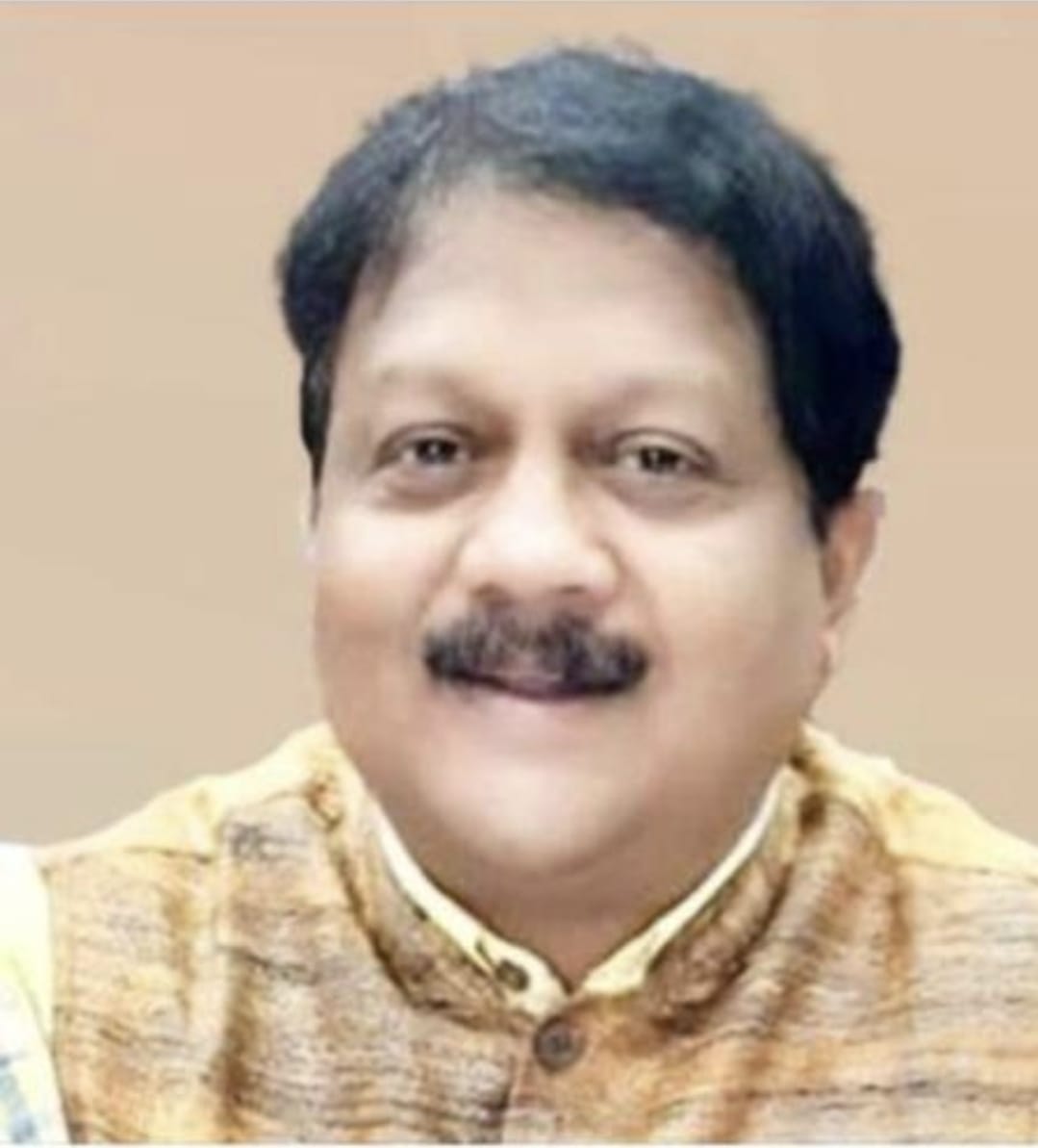
In the evolving landscape of public administration in India, the role of a district collector has transformed from that of a distant bureaucratic authority to a people-centric leader navigating the complex intersection of governance, development, and social harmony. Few administrators embody this transition as effectively as Dilip Routai, the Collector of Bhadrak.
During his tenure, Routrai has demonstrated that administration is not merely about policies and procedures—it is about character, conviction, and the ability to transform challenges into opportunities.
Governance Rooted in Adaptability
Routrai often describes a public administrator as a MULTI SPECIALIST In a dynamic district like Bhadrak, where natural disasters, social complexities, and developmental aspirations converge, ADAPTABILITY becomes the defining trait of leadership.
For Routrai, governance begins with a simple philosophy: a public administrator must ACCEPT responsibilities but should never EXPECT rewards. The focus, he believes, must always remain on service rather than recognition.
“Life itself is uncertain, and the only certainty in life is uncertainty,” he reflects. For administrators, dealing with unpredictable circumstances—ranging from cyclones and floods to law-and-order challenges—this uncertainty becomes a daily reality. What matters is the ability to navigate through these trials & tribulations ; twists & turns; triumphs & tragedies with ease and elan.
Over the course of his tenure, Routrai has encountered numerous such situations. Yet he views these not as setbacks but as opportunities to grow. “Challenges can be converted into chances, adversities into opportunities, stopping stones into stepping stones,” he says, emphasizing the transformative potential of strong leadership.
Walking the Talk
One of Routrai’s strongest convictions is that leadership must align words with actions.
“People are always watching us ,” he says. “There should never be a gulf between what we profess and what we practice.”
In governance, credibility is often built quietly through consistent action. When administrators truly walk the talk, public trust follows naturally. Routrai believes that CHARACTER is what one knows about himself but REPUTATION is what others know about him. What a person does when no one is watching—forms the true foundation of leadership.
Navigating Crisis with Calm
Routrai’s tenure in Bhadrak has not been without challenges. Soon after assuming office, the district faced the aftermath of severe cyclone DAANAA followed by flooding in several areas. There were also concerns related to drought-like situations and occasional communal tensions.
In addition, Bhadrak hosts some of the most sensitive and high-profile religious events in the region. Festivals such as Kali Puja and Ram Navami attract statewide attention, often placing law-and-order systems under intense scrutiny.
Under Routrai’s leadership, the district administration successfully ensured peaceful celebrations. The 2025 Ram Navami celebrations passed without a single untoward incident—an achievement he describes modestly as a case where “no news is good news.”
The 5 Pillars of Bhadrak’s Strength
Routrai attributes Bhadrak’s administrative success to what he calls the “5P Framework”, a collaborative model that anchors governance in collective responsibility.
1. People
The citizens of Bhadrak, he notes, are informed , intelligent, and love integrity. Their participation makes governance both responsive and accountable.
2. People’s Representatives.
Routrai speaks with admiration about the elected representatives of the district.
“During elections they may represent a political party,” he says, “but after elections they represent the soil ( MAATI) “.
This shared commitment to the development of the district ensures constructive collaboration between the administration and political leadership.
3. Police.
Law and order remains the backbone of development. “Without peace, there can be no prosperity and hence no progress “, Routrai asserts. Effective policing ensures stability and creates the conditions necessary for economic and social progress.
4. Press.
Routrai considers the media as a vital partner in governance. A responsible and vigilant press not only highlights achievements but also critiques shortcomings. This constructive scrutiny, he believes, strengthens democratic accountability.
5. Public Servants.
From Additional District Magistrates and Sub-Collectors to engineers and departmental officials, Routrai emphasizes the importance of teamwork within the administrative machinery. When officials work collectively, governance becomes both efficient and responsive.
Together, these five pillars form the foundation of Bhadrak’s administrative resilience.
CSR as a Development Catalyst
With Bhadrak preparing to host a CSR conclave, Routrai highlights the role of corporate social responsibility in strengthening development initiatives.
He makes a clear distinction: CSR should not “supplant” government efforts—it should “ supplement” them.
Core developmental priorities such as healthcare, education, and drinking water remain central to district administration. Corporate initiatives, when aligned with these priorities, can significantly amplify their impact.
The district administration, Routrai explains, acts as a convergence platform where government institutions, corporate entities, NGOs, and citizen groups collaborate for collective progress.
One example is the district’s involvement in the Pradhan Mantri TB Mukt Bharat Abhiyan, where corporate houses and civil society organizations provide nutritional support to tuberculosis patients for six months. Rotary Clubs, Lions Clubs, business associations, and individual citizens have also stepped forward to contribute.
Such initiatives illustrate how community-driven partnerships can accelerate social transformation.
Peace as the Foundation of Prosperity
Bhadrak has historically experienced occasional communal tensions, making harmony a critical administrative priority. Routrai addresses this challenge through dialogue and deliberation.
Peace committees comprising members from different communities regularly meet under the chairmanship of the district administration. These forums encourage dialogue, promote cameraderie and reinforce the shared goal of development.
“Everyone ultimately wants progress and prosperity,” Routrai says. “But progress cannot be achieved through conflict.”
When necessary, the administration combines education with enforcement—promoting awareness while ensuring that law and order remain uncompromised.
The Philosophy of Humanity
Beyond governance, Routrai’s worldview reflects a broader philosophical perspective.
He believes many conflicts in the world arise from what he describes as a “love for power.” If societies replaced the love of power with the “ power of love”, he argues, humanity could overcome many of its divisions.
“Externally we may appear different—our cultures, our identities, our nations,” he says. “But internally we are all the same. We share the same aspirations, the same fears, the same concerns . All human beings are equal, only the masks are different.”
This philosophy resonates deeply with the ancient Indian ideal of “Vasudhaiva Kutumbakam’ – the world as one family.
Transparency and Public Trust
For Routrai, transparency is another cornerstone of effective governance.
“One must not only be transparent,” he says, “ one must also appear to be transparent.”
Public confidence grows when citizens see accountability in action. In a democratic system, administrators must remain accessible and responsive to the people they serve.
A New Era of District Administration
Historically, district collectors in the colonial era functioned behind what Routrai describes as an “iron curtain,” distant from the public. Today, however, governance demands exactly the opposite.
“The government must go to the people,” he says. “The ASPIRATIONS of the people must be reflected in the ACHIEVEMENTS of the government… the DEMANDS of the public must be aligned with the DELIVERY of the government.
In Bhadrak, this philosophy has translated into an administration that is reliable , responsive, and deeply connected to the community.
Leadership Anchored in Service
In the end, Routrai views himself not as the center of power but as a custodian of responsibility.
“Ultimately, everything happens by the grace of God,” “When we run alone, it is called a RACE . But when God runs with us it is called GRACE”, he says with humility. “We are only instruments performing our duties.”
It is this blend of humility, administrative clarity, and people-first governance that defines the leadership of Dilip Routrai, – a public servant striving to ensure that Bhadrak continues to play a pivotal role in the development journey of Odisha.
