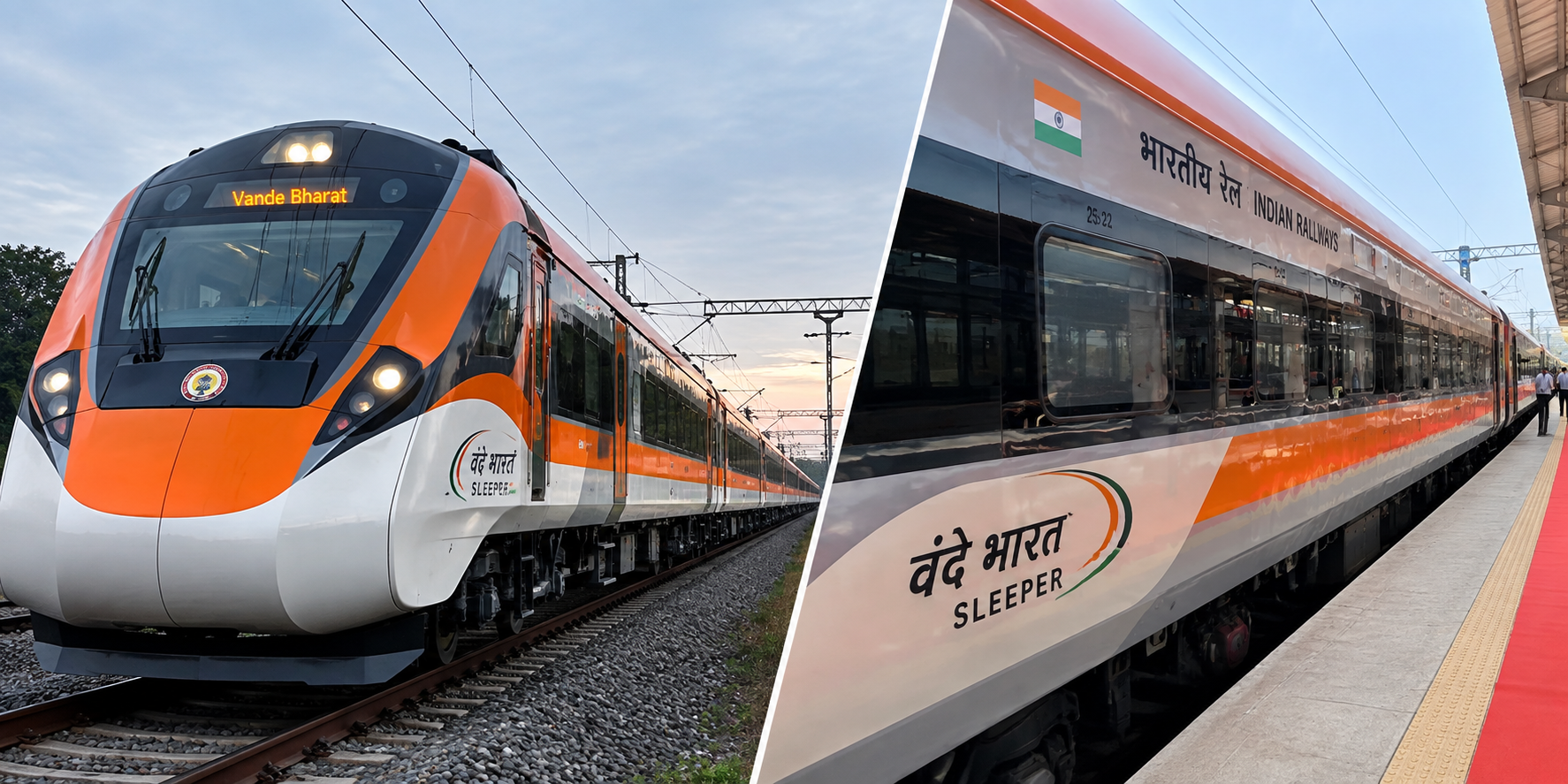
New Delhi: India’s railway modernisation journey has taken another significant step as Bharat Heavy Electricals Limited (BHEL) and Titagarh Rail Systems Limited (TRSL) signed a Joint Venture Agreement on September 15, 2026, to establish a company dedicated to the comprehensive maintenance of Vande Bharat Sleeper trainsets for 35 years. The proposed company will be owned equally by the two partners, with each holding a 50% stake.
A Long-Term Partnership Beyond Manufacturing
The agreement represents more than a conventional maintenance contract. The JV will combine the engineering and technical capabilities of BHEL and Titagarh to support the operational readiness, safety and reliability of the supplied Vande Bharat Sleeper fleet throughout its service life.
The company is proposed to be incorporated as a private limited company with an initial paid-up capital of ₹50 lakh and its registered office in Delhi. BHEL and Titagarh will each nominate two directors to its board.
80 Trainsets, 35 Years of Maintenance
The larger Vande Bharat Sleeper programme being executed by the BHEL–Titagarh consortium covers the supply of 80 trainsets, their maintenance for 35 years, and upgrades to two maintenance depots and one manufacturing unit.
BHEL has previously described the 80-trainset contract as an important milestone in its diversification strategy. The sleeper trains are designed for longer-distance journeys and are capable of operating at speeds of up to 160 kmph.
Strengthening India’s Indigenous Rail Ecosystem
The partnership reflects the changing landscape of Indian railway manufacturing, where domestic engineering companies are increasingly being involved not only in producing rolling stock but also in providing long-term lifecycle support.
For BHEL, traditionally associated with India’s power and heavy-engineering sectors, the Vande Bharat programme represents an important expansion of its transportation business. For Titagarh Rail Systems, the collaboration further strengthens its position in India’s evolving passenger rail manufacturing ecosystem.
The 35-year maintenance commitment is particularly significant because reliability and availability will remain critical as technologically advanced trainsets become a larger part of India’s railway network.
Vande Bharat Moves Into Long-Distance Travel
While Vande Bharat has become one of the most visible symbols of India’s railway modernisation, the sleeper variant expands the platform toward long-distance overnight travel.
BHEL says the sleeper trainsets are being developed with passenger comfort and safety in focus, alongside energy efficiency and reduced inter-city travel time.
Engineering the Next Chapter of Indian Railways
The BHEL–Titagarh JV therefore represents more than a corporate partnership. It connects indigenous manufacturing, advanced railway engineering and decades-long maintenance capability within the same ecosystem.
With 80 Vande Bharat Sleeper trainsets and a 35-year maintenance horizon, the partnership demonstrates how India’s railway transformation is increasingly creating long-term opportunities for domestic engineering and manufacturing companies.
The next chapter of Vande Bharat is not just about building trains — it is about creating an indigenous ecosystem capable of keeping them running safely and reliably for decades.