
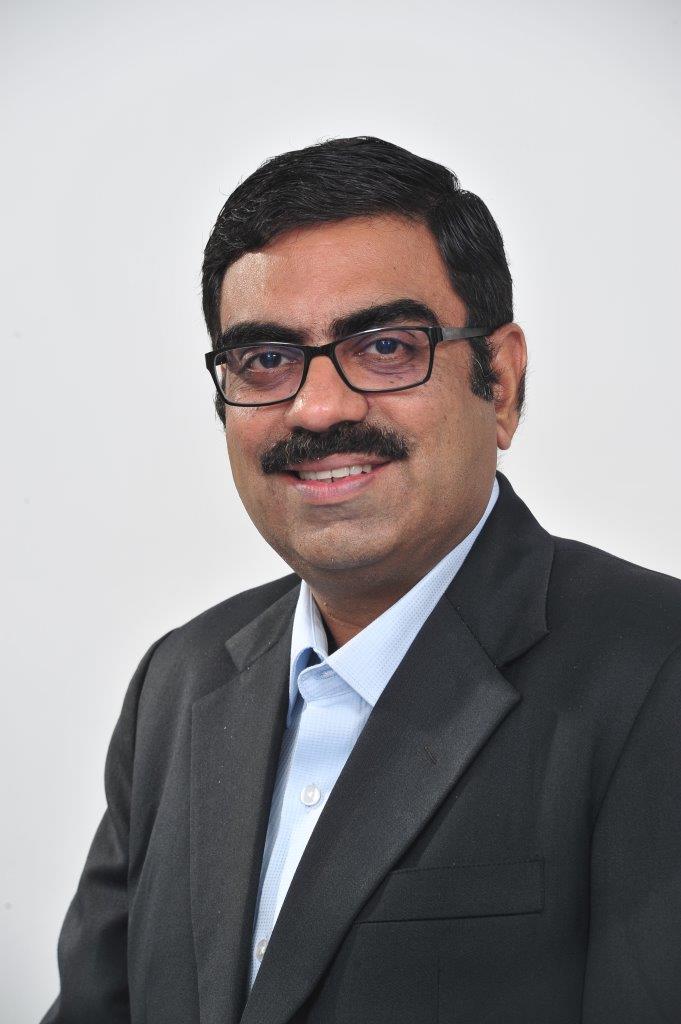

India is rapidly transforming and in a rapidly industrial landscape of India, leadership today demands far more than operation expertise. It requires the ability to align technology with people, growth with sustainability, and corporate ambition with national development. Few leaders represent this convergence as effectively as Sandeep Dhir, whose remarkable journey through engineering, operations and maintenance , human resources, industrial relations, and strategic leadership reflects the changing face of modern Indian industry. Today, as the Chief Executive Officer of Tata Steel Technical Services Limited, Dhir stands at the center of one of India’s most significant industrial growth narratives — the rise of Odisha as the steel and infrastructure powerhouse of the nation.
An Electronics and Communication Engineer by training, Dhir began his professional journey deeply rooted in the technical core of industrial operations. His early years involved handling integrated electrical maintenance systems within Tata Steel’s operational ecosystem, managing highly sophisticated electrical and electronic systems ranging from millivolt-level instrumentation to advanced propulsion and maintenance technologies. Like many leaders shaped inside India’s manufacturing sector, his understanding of industry was built not in boardrooms but on the shop floor, amidst operational complexities, engineering challenges, and plant-level execution. These formative experiences gave him not only technical depth but also a sharp understanding of industrial discipline, systems thinking, and execution excellence.
Over time, his role expanded beyond engineering into larger operational and strategic responsibilities. Between 1998 and 2010, Dhir was closely associated with cold rolling operations, a phase that significantly strengthened his exposure to large-scale manufacturing ecosystems. What makes his professional evolution particularly noteworthy is the seamless transition he made from hardcore engineering and operations into leadership development and human resources — an uncommon combination that later became one of his greatest strengths. His ability to understand both machines and people allowed him to navigate leadership roles across multiple domains within Tata Steel. He went on to become Chief Learning and Development Officer, followed by his appointment as Chief HR and Industrial Relations Officer for the Jamshedpur Works of Tata Steel. Subsequently, he handled the HR and IR responsibilities for Tata Steel’s entire PAN-India steel verticals, including major operational and expansion ecosystems across the country.
A defining phase of his leadership journey came during the integration of acquired steel assets such as the Bhushan Steel operations. In 2019, he was deputed as CHRO to oversee people integration and organizational alignment during a crucial transformation period. The assignment demanded not only HR expertise but also the ability to manage culture integration, industrial harmony, workforce alignment, and large-scale organizational transition. His leadership during this phase reflected Tata Steel’s larger philosophy of combining business transformation with human-centered management practices.

In 2022, Dhir was appointed CEO of Tata Steel Technical Services Limited, a strategic subsidiary created to support the rapidly expanding industrial ecosystem of Tata Steel. The organization was envisioned not merely as a manpower support function, but as a future-ready technical services platform capable of delivering specialized technical expertise, industrial support systems, and scalable operational capability across Tata Steel’s growing projects. Under his leadership, the company is gradually positioning itself as a center of excellence capable of supporting some of India’s largest industrial expansion initiatives.
Central to Dhir’s vision is the belief that Odisha will play a defining role in India’s future industrial growth. Tata Steel’s expansion footprint across Kalinganagar, Meramandali, NINL, and other operational ecosystems reflects the strategic importance of Odisha in India’s infrastructure ambitions. Existing plants producing millions of tons of steel annually are now entering aggressive expansion phases, and according to Dhir, a substantial portion of India’s future steel production will emerge from Odisha. In his view, the relationship between Odisha and India’s industrial future is deeply interconnected — as Odisha grows industrially, India’s infrastructure ambitions gain momentum.
This industrial growth story, however, is not merely about steel production. Dhir repeatedly emphasizes the importance of employment generation and capability building for local communities. He believes that large-scale industrialization can become a transformative social force only when local populations become active participants in the growth ecosystem. As Tata Steel expands its operational footprint, Tata Steel Technical Services Limited is expected to play a crucial role in developing skilled manpower, technical capabilities, and training ecosystems that create sustainable employment opportunities for the people of Odisha. The focus is not limited to hiring; it is about creating industrial readiness through technical training, apprenticeship programs, train-the-trainer initiatives, curriculum support, and capability development frameworks.
One of the most insightful aspects of Dhir’s perspective is his understanding of the persistent gap between academia and industry. During interactions with educational institutions, engineering colleges, and industrial stakeholders, the concern regarding employability and industry readiness frequently emerges. Dhir addresses this issue with a highly practical viewpoint. According to him, organizations themselves must take responsibility for transforming academic talent into industry-ready professionals. At Tata Steel, this transformation happens through structured transition programs. Fresh recruits from ITIs, diploma institutions, engineering colleges, and management schools undergo intensive training before entering operational roles. Trade apprentices go through long-duration apprenticeship structures, diploma engineers experience technical immersion programs, and management trainees are exposed to operational and behavioral learning frameworks that bridge the gap between classroom learning and industrial realities. For Dhir, this transition ecosystem acts as the real bridge between education and industry.
Despite operating within one of the country’s most technically intensive industrial ecosystems, Dhir’s leadership philosophy remains deeply human-centric. He strongly advocates for workplace cultures built on dignity, fairness, and transparency rather than fear or toxicity. One of his most striking leadership observations is his belief in “praising in public and correcting in private.” In an era where conversations around workplace burnout, toxic management, and psychological safety are becoming increasingly important, his emphasis on respectful leadership reflects the cultural values long associated with the Tata Group. While he acknowledges that organizational discipline is essential, he believes accountability must always be accompanied by fairness and clarity. Policies, according to him, should remain transparent, uniformly applicable, and clearly communicated to every employee regardless of hierarchy.
Safety, ethics, and values form the foundation of Tata Steel’s operational philosophy, and Dhir repeatedly reinforces that these are non-negotiable principles. As industrial expansion accelerates across Odisha, maintaining operational safety and ethical discipline becomes even more critical. He believes that the Tata legacy, built over more than 150 years, carries with it an institutional responsibility toward ethical growth and responsible industrialization. Growth without ethics, in his words, cannot be sustainable, and expansion without safety cannot be accepted.
Another area where Dhir offers compelling insight is the evolving role of Human Resources in modern organizations. He believes HR can no longer function merely as an administrative or compliance-driven department. Instead, it must emerge as a strategic boardroom partner deeply involved in sustainability, workforce transformation, ESG priorities, culture building, and long-term organizational planning. This perspective becomes particularly relevant in the context of Tata Steel’s ambitious sustainability and net-zero commitments. With operational exposure across Europe and other global markets, Tata Steel has already internalized many advanced sustainability practices. According to Dhir, environmental monitoring, emission reduction, energy efficiency, and responsible industrial operations are now deeply integrated into operational KPIs across the organization. The company’s ambition is not merely regulatory compliance but leadership in sustainable industrialization.
Equally significant is Tata Steel’s philosophy toward Corporate Social Responsibility. Long before CSR became a statutory mandate in India, the Tata Group had institutionalized the idea of giving back to society. Dhir believes CSR should never function as an isolated vertical disconnected from mainstream organizational culture. Instead, volunteerism, social impact, and community development must become integrated into the company’s HR and leadership philosophy. Initiatives related to education, healthcare, women empowerment, child welfare, and livelihood generation are therefore not viewed merely as external obligations but as extensions of the organization’s larger social responsibility.
Having spent years observing Odisha’s industrial and governance transformation, Dhir also speaks positively about the evolving mindset within the state. He sees increasing alignment between government institutions, bureaucracy, industry, and public systems toward time-bound execution and excellence-driven growth. From successfully hosting global events like the Men’s FIH Hockey World Cup to becoming one of India’s fastest-growing industrial destinations, Odisha is emerging as a state capable of balancing industrial ambition with administrative agility. For organizations like Tata Steel, this creates a highly conducive environment for long-term industrial investment and ecosystem development.
As India moves steadily toward its Vision 2047 aspirations, leaders like Sandeep Dhir represent a new generation of industrial leadership where engineering, people development, sustainability, ethics, and nation-building are no longer separate conversations. Under his leadership, Tata Steel Technical Services Limited is gradually evolving into far more than a manpower support organization. It is becoming a strategic institution designed to support industrial growth, generate employment, build human capability, strengthen communities, and contribute meaningfully to India’s long-term develo
pment journey.
