
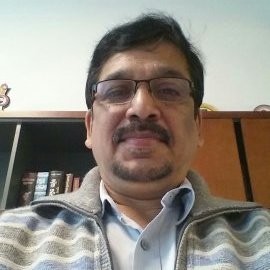
BY CHARAN SINGH
There are leaders who speak of change, and then there are those who become its scaffolding. Dr. Prashant Hota belongs firmly to the latter. Listening to him is not like attending an interview; it is like being walked through India’s back lanes—railway counters, tribal hamlets, school verandahs, adolescent health camps, and drought-scarred farms—where democracy is not debated, but lived.
“Democracy,” he says, almost casually, “should not be confined to politics.”
And then he pauses.
“It should touch health. Education. Livelihood. Dignity. Life itself.”
That one sentence defines the philosophy guiding the CSR vision of Jindal Steel & Power and its social arm, the Jindal Foundation—a philosophy that believes the last person in the queue must never be invisible.
Learning Democracy at a Railway Counter
Dr. Hota does not quote textbooks. He quotes lived India.
He speaks of the Mumbai local train ticket counter—the kind that handles humanity at computer speed. A man with no change. Another with no time. A third with only trust.
The ticket is issued anyway.
Because if the last man misses the train, he misses his livelihood.
“That,” Dr. Hota says quietly, “is inclusiveness.”
It is not a CSR framework.
It is not an audit metric.
It is emotional intelligence institutionalized.
And this inclusiveness—so instinctive, so Indian—has become the cornerstone of JSPL’s CSR strategy, one that today aligns with all 17 of the United Nations Sustainable Development Goals. Rare for a steel company. Rarer still for it to be lived beyond PowerPoint.
From Economic Swaraj to Social Wealth
Long before “Make in India” became a slogan, O.P. Jindal was already practicing it. A steel rod stamped Made in Britain inside a local train triggered not anger—but resolve.
That resolve built an empire.
But more importantly, it built economic sovereignty.
Dr. Hota reminds us: political freedom without economic independence is incomplete. Steel, power, renewables—these are not businesses alone; they are national enablers.
Yet what elevates the Jindal story is this:
Even when profits disappeared between 2015 and 2017, CSR spending did not.
₹50–100 crore was spent when there was no legal obligation.
Why?
Because CSR, here, is not compliance.
It is character.
“You can only give what you have,” Dr. Hota reflects.
“But compassion does not wait for profit.”
Democracy of Dimensions of Life
Dr. Hota introduces a phrase that deserves to enter India’s development vocabulary:
DDL — Democracy of Dimensions of Life.
Not just the right to vote, but the right to:
Live without hunger
Drink clean water
Access healthcare
Learn in dignity
Earn without migration
This belief drives initiatives across health, sanitation, skill, women empowerment, natural resource management, sports, art, and culture.
But it is in quiet programs that his philosophy shines brightest.
Kisori Express: When Adolescence Was Finally Seen
Government schemes spoke of mothers.
They spoke of children.
They spoke of youth.
But nobody spoke of the girl in between.
So Dr. Hota and his team launched Kisori Express—a comprehensive intervention for adolescent girls battling chronic anemia, silence, and stigma.
Eight lakh girls.
Pulled back from weakness into strength.
From invisibility into agency.
Sanitary health. Nutrition. Awareness. Confidence.
CSR did not rescue them.
It recognized them.
Wadi: One Acre, One Revolution
If there is one project that carries Dr. Hota’s heartbeat, it is Wadi.
One acre of land.
Mango trees. Cashew trees. Forestry borders. Intercrops.
Income rose from ₹15,000 a year to ₹3.5–4 lakh.
But the real dividend was not money.
It was return.
95% of poverty-induced migrants came back.
Homes replaced slums.
Children returned to schools.
Villages stopped bleeding people.
Earlier, they were migrants.
Now, they are landowners with dignity.
This is not charity.
This is civilization repair.
Skill, But With Aspiration
Dr. Hota does not believe in “barefoot skills”—unsafe, low-dignity labour.
He believes in Industry 5.0 at the grassroots.
Mechatronics. AI-assisted maintenance. Healthcare technology.
Tribal youth learning tomorrow’s skills today.
Because, as he says:
“Gen Z are global citizens.
If we teach them hammers, we betray their future.”
Hunger Is a National Emergency
One crore hot cooked meals.
Not as a statistic.
As a moral response.
During COVID, oxygen plants were converted. Meals were cooked. Leaders were present on the ground, not on screens.
Dr. Hota recalls a statement by Mr. Naveen Jindal in Parliament:
“If one Indian sleeps hungry, it is a national emergency.”
CSR, in that moment, stopped being corporate.
It became constitutional.
Unsung Heroes, Real India
Dr. Hota speaks with reverence of people history forgot:
A widow who built a hospital after losing her husband
Tribal innovators working in silence
Raghunath Murmu, unknown until he gifted a script to a people
Just as thousands fought for freedom without pensions, today thousands build India without applause.
And this is where Dr. Hota turns to media.
Media as the Fourth Pillar—With a Spine
Media, he says, must inform, educate, question—but not distort.
Corporates are not private islands.
They are social wealth.
Telling stories of unsung change-makers is not soft journalism.
It is democratic duty.
A Life That Came Full Circle
Dr. Hota calls himself a product of NABARD.
Twenty-three years. First batch. Field to policy.
The Wadi model he nurtured was later endorsed nationally by A.P.J. Abdul Kalam himself.
What he learned there, he brought here.
Not as authority.
But as gratitude in action.
Final Word
Dr. Prashant Hota does not chase legacy.
He constructs ecosystems.
In a world obsessed with visibility, he works on foundations.
In a time of slogans, he builds systems.
In an age of speed, he practices patience.
And perhaps that is his greatest achievement:
He reminds us that India will not be built by noise,
but by those who quietly ensure
that the last person in the queue
never misses the train.
