
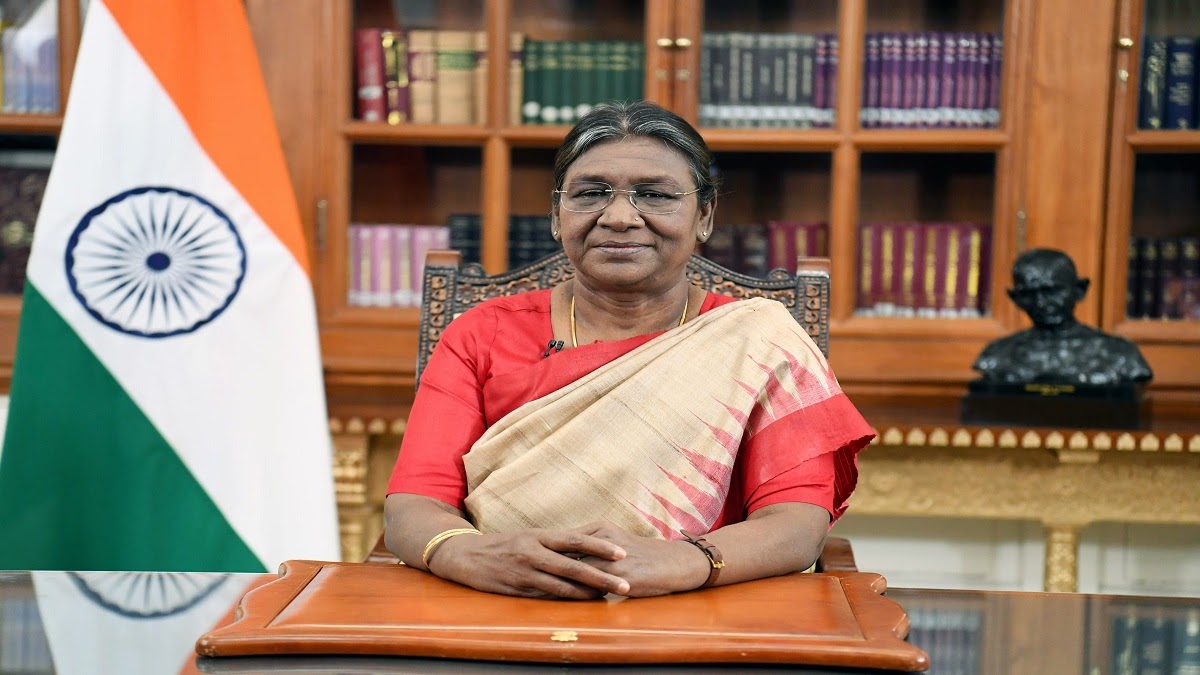

From a humble tribal village to the highest office in the land, Draupadi Murmu’s journey embodies the power of resilience, empowerment, and inclusive leadership, inspiring millions to break barriers and shape their own destinies.
In the story of modern India, few figures embody the spirit of resilience, empowerment, and transformation as powerfully as Draupadi Murmu. Her journey—from humble tribal roots to becoming the first tribal woman to hold the office of President of India—serves as a beacon of hope, a testament to the power of perseverance, and a reflection of the nation’s evolving commitment to inclusivity.
Born on June 20, 1958, in the remote village of Uparbeda in Odisha’s Mayurbhanj district, Draupadi Murmu was raised in the Santhal tribal community, where educational opportunities for women were rare, and societal expectations were confining. Yet, against all odds, she pursued education with determination, becoming one of the few women from her village to graduate from Rama Devi Women’s College in Bhubaneswar with a Bachelor of Arts degree.
Murmu’s early career was grounded in public service, starting with a role as a junior assistant in the Odisha government’s Irrigation Department. She later became a school teacher, before stepping into politics. In 1997, she joined the Bharatiya Janata Party (BJP), and soon after, her leadership qualities earned her a seat as a councilor in Rairangpur. Her tireless work for her community led her to become the Chairperson of Rairangpur Nagar Panchayat, and later, an elected member of the Odisha Legislative Assembly from 2000 to 2009.
Throughout her political journey, Murmu earned recognition for her commitment to local development and the welfare of marginalized communities. She was honored with the Pandit Nilakantha Das Best Legislator Award in 2007 for her outstanding contributions to public service.
Her personal life, however, was marked by immense hardship. Draupadi Murmu faced devastating personal losses, including the deaths of her husband and two sons in quick succession. Yet, despite these heartbreaking tragedies, she remained steadfast in her duties, drawing strength from her cultural heritage and deep spiritual resilience.
In 2015, Murmu made history as the first tribal woman to be appointed Governor of Jharkhand. During her tenure, she became a fierce advocate for the rights of tribal communities, particularly through her opposition to proposed amendments to the Chhotanagpur and Santhal Pargana Tenancy Acts, which would have threatened tribal land rights. Her firm stance earned her deep respect and admiration from all sectors of society.
In 2022, Draupadi Murmu achieved a historic milestone when she was elected as the 15th President of India. Her election was not only a triumph for tribal communities but also marked a new chapter in India’s democratic landscape. As the youngest individual to hold the office, President Murmu continues to champion causes related to education, healthcare, and sustainable development, particularly for marginalized and tribal communities.
Throughout her presidency, Draupadi Murmu has exemplified a quiet yet powerful leadership style, focused on accessibility, equality, and empowering India’s most vulnerable populations. Her commitment to service and her ability to inspire others through her resilience have made her a role model for millions across the country.
Draupadi Murmu’s legacy is a testament to the transformative power of perseverance, faith, and a deep sense of duty. Her life story is a powerful reminder that leadership is not defined by one’s beginnings, but by the courage and determination to serve and uplift others. As India’s first tribal president, she has reshaped the pathways for future generations, proving that no challenge is insurmountable when approached with strength and vision.
