
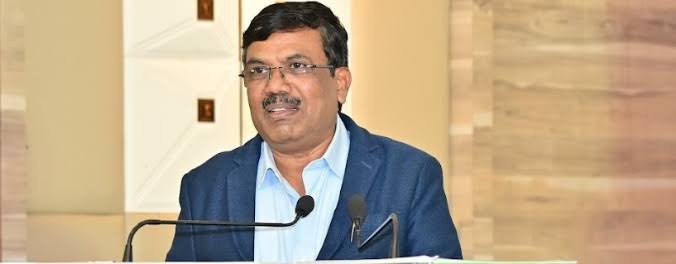
The Government of Odisha has appointed Dr. K. Murugesan, IFS (RR-1994) as the Principal Chief Conservator of Forests (PCCF) and Head of Forest Force (HoFF), Odisha, placing the senior Indian Forest Service officer at the helm of the state’s forest administration. The appointment was made in pursuance of Note-2 of Rule 3(2) of the IFS (Pay) Rules, 2016, placing him in the Apex Scale, Level-17 of the Pay Matrix, the highest level in the Indian Forest Service cadre. The Odisha Forest Department currently lists Dr. Murugesan as PCCF & HoFF, with his posting effective from 31 January 2026.
The notification was issued by the General Administration & Public Grievances Department, Government of Odisha, with Additional Secretary Debasis Singh signing the order by direction of the Governor. Murugesan took charge following the retirement of Suresh Pant, IFS, from the post.
A 1994-batch Odisha-cadre IFS officer, Murugesan brings more than three decades of experience across forestry, environmental regulation, conservation, climate policy and forest administration. Government records identify him as OR-121, born on 15 July 1968, with qualifications including B.Sc., M.Sc. and Ph.D.
His academic background includes a Ph.D. in Entomology, with specialisation in insecticide toxicology, providing a scientific foundation to his career in environmental and forest administration.
Over the years, Murugesan has held several important assignments. He served as Conservator of Forests at the Institute of Wood Science and Technology, Bengaluru, under the Indian Council of Forestry Research and Education. In Odisha, he served as Director, Environment and Special Secretary in the Forest & Environment Department and later as Member Secretary of the Odisha State Pollution Control Board (OSPCB). He has also served as the Chief Executive of the Regional Plant Resource Centre (RPRC), Bhubaneswar.
His association with the Centre for Environmental Studies (CES), Odisha, further reflects his involvement in environmental education and public awareness. During his tenure as Director, CES worked on environmental education, Eco-Clubs, wetland conservation, plastic-pollution awareness, nature camps and capacity-building programmes. CES activities in 2025, for instance, engaged schools, students and communities in wetland conservation and environmental-awareness initiatives.
Prior to his elevation, Murugesan also handled the crucial forest-diversion and nodal responsibilities under the Forest Conservation Act, dealing with proposals involving forest-land diversion for development and infrastructure projects.
He was also associated with the Odisha Forestry Sector Development Project (OFSDP) as Project Director. Under his leadership role in planning the proposed third phase, the department considered greater use of digital technology, agroforestry, large-scale wood cultivation and wood certification for environmentally responsible forestry. The second phase has been associated with sustainable forest management and livelihood security in more than 1,200 forest-fringe villages.
As PCCF & HoFF, Murugesan now oversees Odisha’s forest administration, including forest conservation, afforestation, wildlife protection, biodiversity management, forest-fire preparedness, ecological restoration and climate-related initiatives.
Since assuming charge as PCCF & HoFF, Dr. K. Murugesan has placed strong emphasis on strengthening forest-fire preparedness and response mechanisms across Odisha. For the 2026 fire season, the Forest Department prepared 20,461 km of fire lines and deployed 334 fire-protection squads, along with 5,000 leaf blowers and 1,751 safety kits. Awareness programmes were undertaken in forest-fringe villages, while training was expanded for field personnel and emergency-response teams. The department also strengthened technological surveillance through the deployment of drones, AI-integrated cameras and AI towers, particularly in Similipal Tiger Reserve and other protected areas, to improve early detection and response to forest fires.
A major focus of his tenure has been the modernisation and digitisation of forest governance. Odisha has moved towards an integrated technology-based monitoring system through the establishment of an Integrated Forest Monitoring and Command Centre, along with the launch of Odisha Forest Management System 2.0 and a dedicated web application for forest monitoring. The system brings together field-level information, satellite-based monitoring, GIS analytics and digital decision-support mechanisms to strengthen forest protection, wildlife management and disaster response. A Compensatory Afforestation Land Bank has also been developed to facilitate systematic management of land available for compensatory afforestation.
Under his leadership, the Forest Department has also advanced work towards an Odisha Eco-Restoration Policy, proposed around the framework of “Four Modules – One Map – One Policy.” The approach seeks to move beyond plantation-based forestry towards site-specific ecological restoration, with emphasis on artificial and assisted natural regeneration, restoration using native species, scientific thinning, protection of degraded and blank forest patches, and GIS-based monitoring. The proposed framework also gives importance to natural regeneration, biodiversity conservation and community participation in improving the long-term ecological quality of forests.
Community participation and livelihood-linked conservation have also remained important components of the forestry approach during his tenure. Through the Odisha Forestry Sector Development Project and related forest-management programmes, emphasis has been placed on strengthening Vana Surakshya Samitis and Forest Protection Committees, building local capacity and linking forest conservation with sustainable livelihood opportunities. The approach recognises the role of communities living around forests as participants in forest protection and ecological restoration.
His tenure has also involved greater emphasis on technology-supported conservation and wildlife protection, particularly in protected areas. The integration of digital monitoring, drones, GIS-based systems and real-time information is intended to strengthen the department’s capacity to monitor forests, respond to threats and improve coordination between field-level personnel and central monitoring systems. These measures form part of a broader effort to make Odisha’s forest administration more data-driven, responsive and capable of addressing emerging challenges such as forest fires, biodiversity loss and climate-related pressures.
Together, these initiatives reflect a broader direction in Odisha’s forest administration under Dr. Murugesan’s tenure, combining forest protection and ecological restoration with technology, scientific management, community participation and climate resilience.
With his combination of scientific training, environmental-regulatory experience, forest administration and project leadership, Dr. K. Murugesan assumes charge at a time when Odisha’s forest sector is increasingly focused on conservation, technology-driven monitoring, climate resilience and sustainable management of its natural resources.
