Subhechcha Ganguly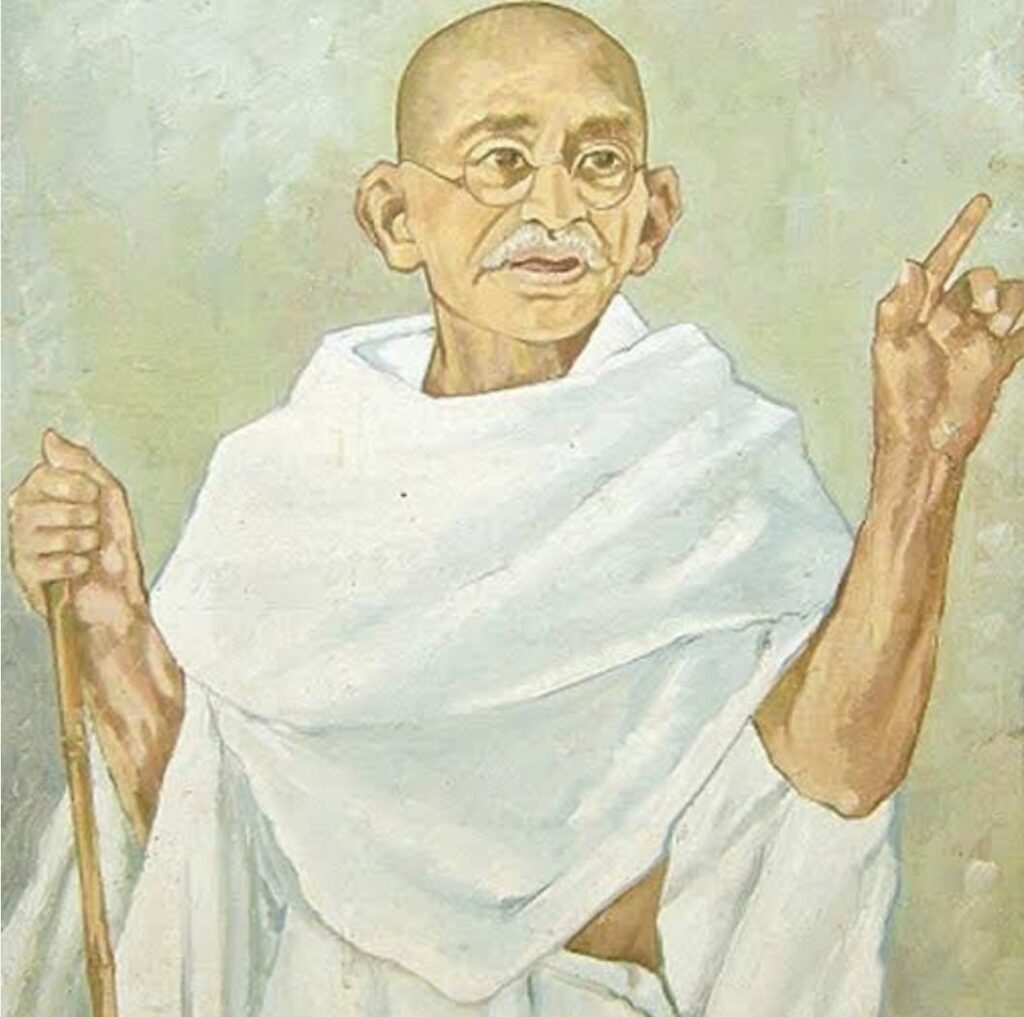
Dr Goutam Saha teaches and researches Entrepreneurship and Sustainable Business Practices at the National Institute of Fashion Technology, Bhubaneswar.
Dr.S.N.Misra is Professor Emeritus, at KIIT University.
Celebrating Mahatma Gandhi’s 154th Birth Anniversary Union Minister of Micro, Small and Medium Enterprises flagged off the Khadi Yatra and announced the ‘KHADI MAHOTSAV,’ scheduled from October 2nd to October 31st, 2023. This festival promotes the “Vocal for Local” initiative and the ‘Atma Nirbhar Bharat Abhiyan. It also aims to focus on developing of artisan community. Truly speaking, Market and the state, after Indian economic liberalisation in 1991, have become the two pillars with enormous power in today’s economic agenda. However, we missed the opportunity for community-led local economic development which Gandhiji had envisioned. Modern-day economists like Raghuram Rajan and Jeffrey Sachs quite rightly argue that future economic development should be community-led rather than leaving it to the state. One of the pioneers who sowed the seeds of community-led local economic development in India is legendary activist Padma Bhushan Ela Bhatt. She founded SEWA (Self Employed Women’s Association) which completed its 51 years of operation in empowering through a slew of innovative initiatives in microfinance, design, marketing and community bonding for developing the local economy. This article seeks to bring out how SEWA, through its unique architecture, vision, mission and strategy, has had tremendous success in developing a local economy and resilient community in the era of the market-driven global economy led by big capitalist business houses. For her splendid achievements and vision in SEWA, Ela Bhatt and her organization were the recipient of several honorary degrees and international and Indian awards, including the Raman Magsaysay Award for Community Leadership (1977), the Right Livelihood Award for Changing the Human Environment (1984), which is widely known as alternative Nobel Prize, Indira Gandhi Prize for Peace, Disarmament and Development ( 2011), and the Padma Shri (1985) and Padma Bhushan (1986), two of India’s highest civilian honours. She also became the Emeritus member of the Elders, founded by Nelson Mandela to promote human rights and peace. She was also an advisor to the World Bank, Chairperson of Women’s World Banking, and President appointed member of the Rajya Sabha. When our policymakers aim to focus on local economy, self-reliance and community development in a neo liberal economic environment, it is imperative for them to know and learn from SEWA and Ela Bhatt’s vision of local economic development— ‘Hundred Mile Community’.
SEWA, arguably the world’s largest informal organisation and India’s largest trade union, organised 2.5 lakh women in building hundreds of local institutions and organisations that aim to provide food and income security and social protection to its members. Social protection encompasses healthcare, child care and banking and insurance facilities for all the members and their households. SEWA at present has 4000 SHGs, 110 Cooperatives, 15 economic federations, and 3 producer companies. It includes RUDI Multi Trading Company for agricultural business, Hariyali for providing green energy solutions, Gitanjali ( Cooperatives of waste pickers for recycling and marketing ) SEWA Trade Facilitation Centre for artisan business ) SEWA Bank (for banking and insurance) SEWA Academy (for training, capacity building and research) VIMOSEWA ( for providing social protection), SEWA Research, SEWA Managerni School ( for management and entrepreneurial education). All the organisations are owned by self-empowered women, who manage them, democratically run and aim towards self-reliance, both financially and managerially. Unlike many trade unions, apart from organising its members, SEWA’s relentless focus is on forming cooperatives and developing local communities, which makes SEWA very distinct. Case studies of SEWA on building these community-led organisations are examples of developing economic success and building capabilities and well-being famously espoused by Nobel Laureate Amartya Sen.
The visionary leadership of SEWA’s struggle generated The Unorganised Workers Social Security Act (2008), The National Rural Livelihood Mission (2011) and the Street Vendors Act 2014. Interestingly, the microfinance model inspired the establishment of Gramin Bank, founded by Nobel laureate Bangladesh-based economist Mohammad Younis who fulsomely praised Ela Bhatt in his Nobel Prize acceptance speech. A lasting bequest of Ela Bhatt is the sui generis concept of Hundred Mile Community. She argued three basic needs of life – food clothing and shelter and three basic services primary health care, primary education and primary financial services must be met locally more specifically within a hundred-mile radius. People, products, news and knowledge circulate easily in an environment-friendly way. This fosters a synergy between nature and members of the community. This unique relationship is called Anubandh, gaining awareness of our places in the world in a more environment-friendly way. The shorter the distance, the more committed the community becomes. Cooperative ventures would become more viable with easy access to basic services like banking, healthcare and education, and the quality of life would improve fundamentally. The hundred-mile community weaves together decentralisation, locality, scale and livelihoods. Quoting Ela Bhatt, “ Although the focus of the hundred-mile community is local, the outcomes are much larger; overlapping hundred-mile communities can be seen as a part of the global solution to counter environmental degradation and promote inclusive development. By consciously adopting Anubandh in our lives and building local communities, we can weave a web of relationships with people and with nature across the world.”
Before articulating the architecture, she and her team made a field study to assess how many of the six basic needs and services were being made locally in the 10 villages. The study found that local knowledge, local production and local consumption are mostly decoupled in those villages. The inhabitants were trapped in a debt spiral without adequate cash and needed to improve their skill bases to improve their income through higher productivity. The villages were further handicapped due to poor access to drinking water and health care. Access to banking was onerous making their lives more tough and challenging. SEWA through community leadership aims to solve these problems in many villages by organizing local women. After adopting SEWA’s initiatives, the members of the communities have a steady source of cash and own a good number of movable and immovable assets by using new and better skills. The vicious cycle of chronic indebtedness, poverty and poor capability has been broken due to the initiatives by SEWA.
India has to contend with the spectre of 90% of its people who are in the unorganised sector and are heavily indebted with scant governmental effort to improve their skill sets and productivity. Many times, government schemes are being used to garner votes instead of improving their productivity and promoting local community skills. Even, vocal for local initiatives need substantial conceptual framework and policy back up. Against this backdrop, the hundred miles community concept to nurture local talent, bring community leadership, and transcending caste, religion and ethnicity is an idea whose time has come. It became a need of the nation. Ela Bhatt was hugely inspired by the Gandhian model of community development, the seed of which Gandhi had planted in Johannesburg through the Tolstoy farm. It was driven by the ideology of simple living and community bonding as advocated by Ruskin in his seminal book Unto The Last. Ela Bhatt, without wearing on her sleeves any ideology, was a true champion of how local communities in a hundred-mile space can be both economically self-sustaining and relationally rewarding. Let the government’s ‘Vocal for Local’ movement get empowered by the strength of the Hundred-Mile Community.